
Fascia release is defined as a therapeutic approach that applies sustained pressure or gentle manipulation to connective tissue to relieve pain and improve mobility in chronic illness. Clinically, this practice falls under the broader term myofascial release, a recognized manual therapy technique used by physical therapists and osteopathic practitioners. For people living with conditions like Lyme disease, fibromyalgia, Morgellons, or ME/CFS, tight and restricted fascia can amplify pain, lock in inflammation, and keep the nervous system stuck in overdrive. The good news is that fascia release for chronic illness does not require aggressive treatment. Gentle, targeted work on connective tissue can shift how your body feels, sometimes dramatically.
What role does fascia play in chronic illness and pain?
Fascia is a continuous web of connective tissue that wraps around every muscle, nerve, organ, and bone in your body. When it functions well, it glides freely and distributes mechanical load evenly. When it stiffens or becomes restricted, it pulls on surrounding structures and generates pain signals that can feel impossible to locate or explain.
Chronic illness accelerates fascial restriction. Inflammation, prolonged inactivity, poor sleep, and systemic stress all cause fascia to thicken and lose elasticity. This is why so many people with chronic conditions describe a full-body tightness that no single diagnosis fully explains.

The neurological side of this is where things get really interesting. Fascia is densely packed with mechanoreceptors, sensory nerve endings that detect pressure, stretch, and movement. When fascia tightens, these receptors fire abnormally and feed distorted signals into the sympathetic nervous system. The result is a nervous system that stays in a low-grade fight-or-flight state, which worsens pain, fatigue, and inflammation.
Recent imaging research confirms this connection. Massage therapy reduced thoracolumbar fascia stiffness by approximately 32% immediately after treatment in chronic low back pain patients, measured via ultrasound shear strain imaging. That is a measurable, real-time biomechanical change that correlates directly with pain relief.
Key ways fascia restriction drives chronic illness symptoms:
- Compresses nerves and blood vessels, reducing circulation and increasing pain sensitivity
- Limits joint range of motion, creating stiffness that worsens with inactivity
- Activates the sympathetic nervous system, keeping the body in a stress response
- Contributes to postural imbalances that strain muscles and joints over time
- Traps metabolic waste products in tissues, feeding local inflammation
What are common fascia release techniques for chronic illness?
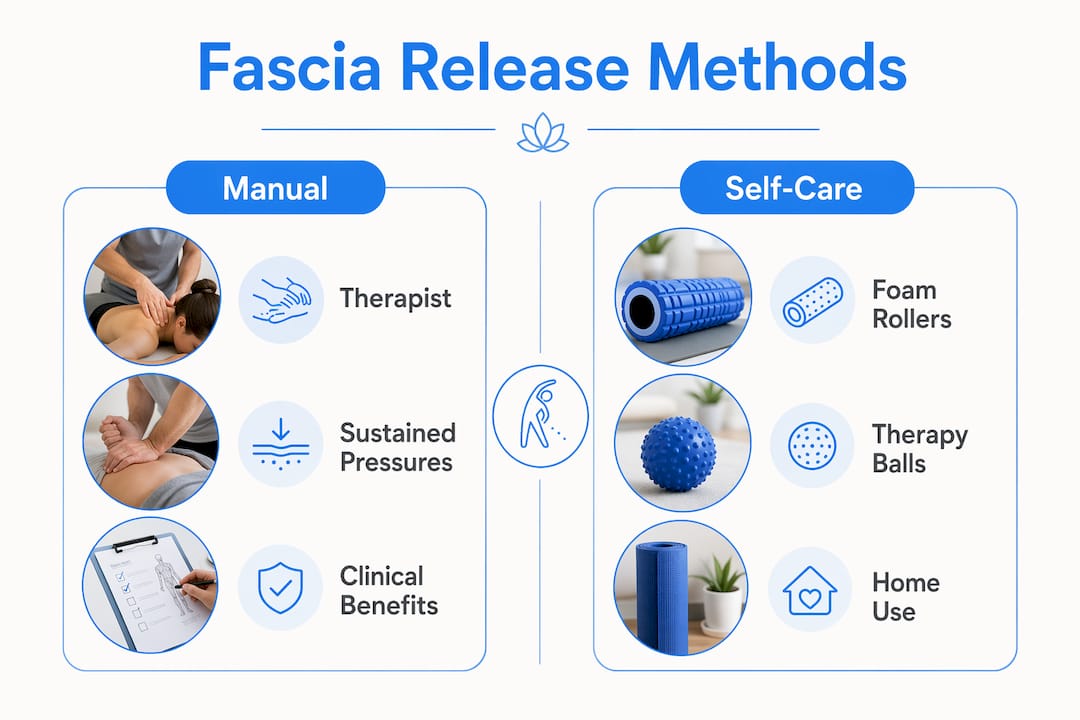
Myofascial release techniques range from hands-on manual therapy to gentle self-care tools you can use at home. The right approach depends on your condition, your current symptom load, and how your body responds to pressure.
Manual myofascial release
Manual myofascial release involves a trained therapist applying slow, sustained pressure to restricted areas of fascia. The therapist holds a position for several minutes, waiting for the tissue to soften and release rather than forcing movement. This is not deep tissue massage. The pressure is deliberate and patient, designed to communicate with the nervous system rather than physically break down tissue.
Clinical benefits of fascia release often result more from neurological and contextual responses than from physically altering fascia tissue. Sham manual therapy can recreate 60–80% of real manual therapy clinical effects through mechanoreceptor stimulation alone. This tells you something important: the nervous system response is the therapy.
Fascial Counterstrain (FCS)
Fascial Counterstrain is a specialized manual technique that positions the body to shorten and unload restricted fascial structures, allowing the nervous system to reset. It is particularly useful for people with complex chronic illness because it is extremely gentle and does not provoke flares. Just three sessions of Fascial Counterstrain manual therapy rapidly reduced PTSD symptoms and related depression, anxiety, and somatic complaints, linked to decreased inflammation in neuronal sheaths affecting the sympathetic nervous system. For anyone whose chronic illness has a strong nervous system component, FCS is worth exploring.
Self-myofascial release
Self-myofascial release uses foam rollers, therapy balls, or your own hands to apply gentle pressure at home. For people with chronic illness, the key word is gentle. A soft therapy ball placed under the upper back while lying on the floor can release thoracic fascia without triggering a flare. A foam roller used slowly along the calves or thighs can improve circulation and reduce stiffness.
Manual fascial release typically requires 4–8 weeks of 1–2 weekly sessions lasting 2–10 minutes per session to build clinical improvements. Consistency matters far more than intensity.
| Technique | Typical session time | Suitability for chronic illness |
|---|---|---|
| Manual myofascial release | 30–60 minutes | High, with trained therapist |
| Fascial Counterstrain (FCS) | 30–45 minutes | Very high, extremely gentle |
| Self-myofascial release (foam roller) | 5–15 minutes | Moderate, requires careful pacing |
| Therapy ball release | 5–10 minutes | High, low force and easy to control |
Pro Tip: Start with a soft therapy ball rather than a firm foam roller. Soft tools let you feel the tissue respond without overwhelming a sensitized nervous system.
How do you safely perform fascia release if you have a chronic illness?
Safety is the first priority when you are managing a chronic condition. Pushing too hard or moving too fast can trigger a flare that sets you back weeks. The goal is always to calm the system, not challenge it.
Before you start
Talk to your healthcare provider before beginning any fascia therapy program. If you are managing Lyme disease, Morgellons, ME/CFS, or a similar complex condition, communicating with your doctor about alternative therapies is a practical first step. Assess your current symptom level. On high-flare days, skip the session entirely.
A gentle self-release session, step by step
- Choose a quiet, warm space. Cold muscles and fascia are less responsive. A warm room or a heating pad applied briefly beforehand helps.
- Position yourself comfortably. Lying down reduces the load on your body and lets you focus on sensation without fighting gravity.
- Place a soft therapy ball under one area. Start with the upper back or the base of the skull. Let gravity do the work.
- Hold for 2–5 minutes without moving. Breathe slowly. You are waiting for the tissue to soften, not forcing it.
- Notice your response. A gentle warmth or a sense of release is a good sign. Sharp pain, dizziness, or increased symptoms means stop immediately.
- Rest for at least 10 minutes after. Your nervous system needs time to integrate the change.
“Gentle fascia therapy is critical for ME/CFS and similar chronic illnesses to calm the nervous system and avoid over-stimulation. The primary therapy goal in such cases is symptom management rather than cure.” Myofascial Release and Chronic Illness Considerations
Pro Tip: Track your symptoms for 24 hours after each session. If you feel worse the next day, reduce the pressure or shorten the hold time. Your body’s feedback is the most reliable guide you have.
Contraindications include active infection, open wounds, blood clots, recent surgery, and severe osteoporosis. If you have a condition that affects tissue integrity, always get clearance first.
How to integrate fascia release into a broader chronic illness wellness plan?
Fascia release works best as one piece of a larger picture. Treating fascia in isolation produces short-term relief. Combining it with other therapies produces lasting change.
Fascia release should be part of an integrated approach involving exercise, motor control retraining, and functional loading for durable clinical outcomes in chronic illness. Successful treatment requires regulation across biomechanical, cellular, nervous system, and brain pathways. This is not a single-tool fix.
Nutrition and hydration directly affect fascia health. Fascia is largely made of collagen and water. Chronic dehydration stiffens fascial tissue, and poor nutrition slows collagen repair. Functional nutrition for chronic illness addresses these foundations and supports the tissue-level changes that fascia therapy initiates.
Mind-body practices pair naturally with myofascial work. Slow breathing, meditation, and gentle yoga all reduce sympathetic nervous system activity, which makes fascia release more effective. When your nervous system is calmer going into a session, the tissue responds faster and holds the release longer.
Supporting wellness practices that complement fascia therapy:
- Gentle movement daily, such as walking or tai chi, to prevent fascial re-restriction
- Anti-inflammatory nutrition to reduce the systemic inflammation that stiffens fascia
- Adequate hydration, at least 8 glasses of water per day, to maintain fascial elasticity
- Sleep prioritization, since fascia repairs itself during deep sleep cycles
- Stress management through breathwork or meditation to lower sympathetic tone
- Collaboration with your healthcare team to monitor progress and adjust the plan
Monitoring your progress matters. Keep a simple symptom journal. Note pain levels, mobility, sleep quality, and energy after each session. Patterns will emerge that help you and your care team refine the approach over time. For guidance on managing symptoms during difficult periods, the chronic illness flare management guide at Megansmiraclestudio offers practical strategies.
What results can you realistically expect from fascia release therapy?
Results vary by condition, frequency of treatment, and how well fascia therapy is integrated with other care. That said, clinical research gives a clear picture of what is possible.
A 6-week fascia-focused physiotherapy program significantly reduced pain and depressive symptoms in chronic low back pain patients compared to conventional therapy, with a pain score reduction of 3.21 points versus 2.17 points on the Numeric Rating Scale. That difference is clinically meaningful. It represents the gap between a day you can function and a day you cannot.
For conditions with a strong nervous system component, results can come faster. Three sessions of Fascial Counterstrain produced rapid PTSD symptom relief, suggesting that neurologically driven chronic illness may respond quickly to the right technique.
| Condition | Typical outcome | Timeframe |
|---|---|---|
| Chronic low back pain | Significant pain and mood improvement | 6 weeks |
| PTSD and somatic complaints | Rapid symptom reduction | 3 sessions |
| ME/CFS and nervous system dysregulation | Calmer nervous system, reduced fatigue | 4–8 weeks |
| Fibromyalgia | Improved mobility and reduced stiffness | 6–12 weeks |
Durable results require continued and integrated therapy. People who stop after initial relief often see symptoms return within weeks. The goal is to build a consistent practice that keeps fascia mobile and the nervous system regulated over the long term.
Pro Tip: Do not judge fascia therapy by how you feel after one session. Judge it by how you feel after six weeks of consistent, gentle work. The cumulative effect is where the real change lives.
Key takeaways
Fascia release for chronic illness works by calming the nervous system, reducing tissue stiffness, and integrating with nutrition, movement, and mind-body practices for lasting symptom relief.
| Point | Details |
|---|---|
| Fascia drives chronic pain | Restricted fascia fires abnormal nerve signals that keep the sympathetic nervous system in a stress state. |
| Gentle techniques work best | Fascial Counterstrain and soft therapy ball release are safest for sensitized chronic illness bodies. |
| Consistency beats intensity | A 4–8 week program of 1–2 weekly sessions produces measurable clinical improvement. |
| Integration is required | Combining fascia therapy with exercise, nutrition, and mind-body work produces durable results. |
| Track your response | Symptom journaling after each session helps you and your care team refine the approach safely. |
What I have learned about fascia release after years of chronic illness
I will be honest with you. When I first heard about myofascial release, I thought it sounded too gentle to do anything real. I was in so much pain that I wanted something aggressive, something that would fight back as hard as the illness was fighting me. That instinct was wrong, and it cost me time.
The research that has come out in 2026 confirms what I eventually learned through experience. The nervous system is the real target. When you apply slow, sustained pressure to restricted fascia, you are not just loosening tissue. You are sending a signal to a body that has been locked in survival mode for months or years. You are telling it that it is safe to let go.
What I have found actually works is starting smaller than you think you need to. One soft ball, one area, five minutes. Then rest. Then do it again tomorrow. The mind-body connection in chronic illness healing is real, and fascia release sits right at that intersection. The emerging research on conditions like Morgellons and Lyme suggests that systemic inflammation affects connective tissue in ways we are only beginning to map. That gives me real hope. We are not guessing anymore. We are building a science around what so many of us already knew in our bodies.
— Megan
Natural support for your fascia health from Megansmiraclestudio
Living with a chronic illness means your body is fighting on multiple fronts at once. Fascia therapy addresses the structural and neurological side of that fight, but your tissues also need internal support to heal.
Megansmiraclestudio carries a range of supplements and internal detox products designed to support the body from the inside out, including options that address inflammation and tissue recovery. For those exploring natural pain relief alongside fascia work, Megansmiraclestudio’s apitherapy resources cover how bee venom therapy may complement connective tissue healing. These are not replacements for fascia therapy. They are tools that work alongside it, supporting the tissue-level changes your body is working hard to make.
FAQ
What is fascia release therapy?
Fascia release therapy, also called myofascial release, applies sustained pressure or gentle stretching to connective tissue to reduce stiffness, relieve pain, and calm the nervous system. It is used by physical therapists, osteopaths, and trained practitioners for chronic pain and illness management.
How does fascia affect chronic illness symptoms?
Restricted fascia compresses nerves and blood vessels, triggers abnormal mechanoreceptor signals, and keeps the sympathetic nervous system in a stress state. This worsens pain, fatigue, and inflammation in conditions like fibromyalgia, Lyme disease, and ME/CFS.
Is fascia release safe during a chronic illness flare?
Gentle techniques like Fascial Counterstrain and soft therapy ball release are generally safe, but active flare days call for rest rather than treatment. Always consult your healthcare provider before starting, and stop immediately if symptoms worsen during a session.
How long does it take to see results from myofascial release?
Clinical research shows meaningful pain and symptom improvement after 4–8 weeks of consistent treatment at 1–2 sessions per week. Some conditions with a strong nervous system component, such as PTSD-related somatic symptoms, can show rapid relief within just three sessions.
Can I do fascia release at home?
Yes. Self-myofascial release using a soft therapy ball or foam roller is accessible and effective for home use. Start with 5-minute holds on low-pressure areas like the upper back, track your response for 24 hours, and adjust based on how your body reacts.