

Hydrogen water is defined as regular water infused with dissolved molecular hydrogen gas (H2), and its role in health benefits centers on one core mechanism: acting as a selective antioxidant that targets harmful free radicals without disrupting your body’s natural cellular signaling. This is not the same as drinking oxygenated water or alkaline water. The clinical term you’ll see in research is “hydrogen-rich water” or HRW, and the distinction matters because the benefits of hydrogen water are tied specifically to dissolved H2 concentration, not pH or oxygen content. Research shows it supports exercise recovery, reduces oxidative stress markers, and produces modest metabolic improvements. If you’re managing a chronic condition or simply trying to protect your health long-term, understanding how hydrogen water improves health at the cellular level gives you a real edge.
What scientific evidence supports the role of hydrogen water health benefits?
The evidence base for hydrogen water has grown meaningfully, and the 2024 data is worth taking seriously. A 2024 meta-analysis of 27 RCTs covering 597 participants found that hydrogen-rich water significantly improves lower-limb explosive power and reduces blood lactate during exercise. That means your muscles recover faster and fatigue less during intense effort. These are not marginal findings. The standardized mean differences were statistically significant, with p-values of 0.018 for power and 0.001 for lactate reduction.
Vascular function and antioxidant enzyme activity tell an equally compelling story. Hydrogen water intake improves vascular function by 25.4% and increases superoxide dismutase (SOD) enzyme levels by 39% in active individuals. SOD is one of your body’s primary internal antioxidant defenses, so a 39% increase is a significant physiological shift, not a rounding error.
Metabolic effects are real but modest. One clinical study found total cholesterol reduced from 6.42 mM to 5.47 mM with hydrogen water intervention, alongside reductions in LDL-C. Researchers noted these effects are not strong enough to replace standard lipid-lowering therapies, but they are meaningful as a complementary support. For someone already working on metabolic health through diet and movement, this is a worthwhile addition.
“Hydrogen water safely improves antioxidant and anti-inflammatory biomarkers, but it is advised as a supplement, not a replacement for conventional medical treatment.” — MD Anderson Cancer Center
Here’s a snapshot of what the clinical data shows across key health domains:
| Health Domain | Reported Effect | Evidence Strength |
|---|---|---|
| Exercise recovery | Blood lactate reduction, power improvement | Strong (27 RCTs, 597 participants) |
| Antioxidant activity | 39% increase in SOD enzyme levels | Moderate to strong |
| Vascular function | 25.4% improvement in active individuals | Moderate |
| Lipid profile | Total cholesterol reduced by ~0.95 mM | Modest, not clinically definitive |
| Inflammation markers | Reduction in some biomarkers | Mixed, pilot-stage evidence |
Where the evidence gets murkier is inflammation. Some trials show reductions in C-reactive protein and other inflammatory markers, but results are inconsistent across populations. This is an area where more large-scale trials are needed before firm conclusions can be drawn.
How does hydrogen water work physiologically?
Molecular hydrogen works differently from most antioxidants you’ve heard of. Molecular hydrogen acts as a selective scavenger of the most damaging reactive oxygen species, specifically the hydroxyl radical and peroxynitrite, without neutralizing the milder free radicals your cells actually need for immune defense and cellular communication. This selectivity is the whole point. General antioxidants like high-dose vitamin C or vitamin E can blunt your body’s redox signaling if taken in excess. Hydrogen doesn’t carry that risk.

When you drink hydrogen-rich water, dissolved H2 molecules are small enough to cross cell membranes and reach mitochondria directly. That’s where oxidative damage tends to accumulate, especially in people dealing with chronic illness, heavy exercise loads, or systemic inflammation. By neutralizing hydroxyl radicals at the source, hydrogen water reduces the cellular damage that drives fatigue, tissue breakdown, and inflammatory cascades.
The practical catch is that hydrogen gas is volatile and escapes quickly. Biological effects require consuming hydrogen water within 15 to 30 minutes after preparation and achieving proper hydrogen saturation in the water. Agitation, heat, or delay all reduce the dissolved H2 concentration before it reaches your gut.
Here’s what actually matters for getting the mechanism to work in your favor:
- Drink hydrogen water immediately after preparation, ideally within 15 minutes
- Use a sealed container and avoid shaking or stirring after dissolution
- Allow magnesium-based tablets to fully dissolve before drinking (typically 3 to 5 minutes)
- Store hydrogen water in airtight, non-porous containers if not drinking immediately
- Avoid drinking with hot food or beverages, which accelerates gas escape
Pro Tip: If you’re using magnesium-based hydrogen tablets, drop the tablet into a sealed bottle, cap it loosely until fizzing slows, then seal tightly and drink within 15 minutes. This preserves the maximum dissolved H2 concentration and gives you the best shot at real biological effects.
How does hydrogen water compare to other antioxidant interventions?
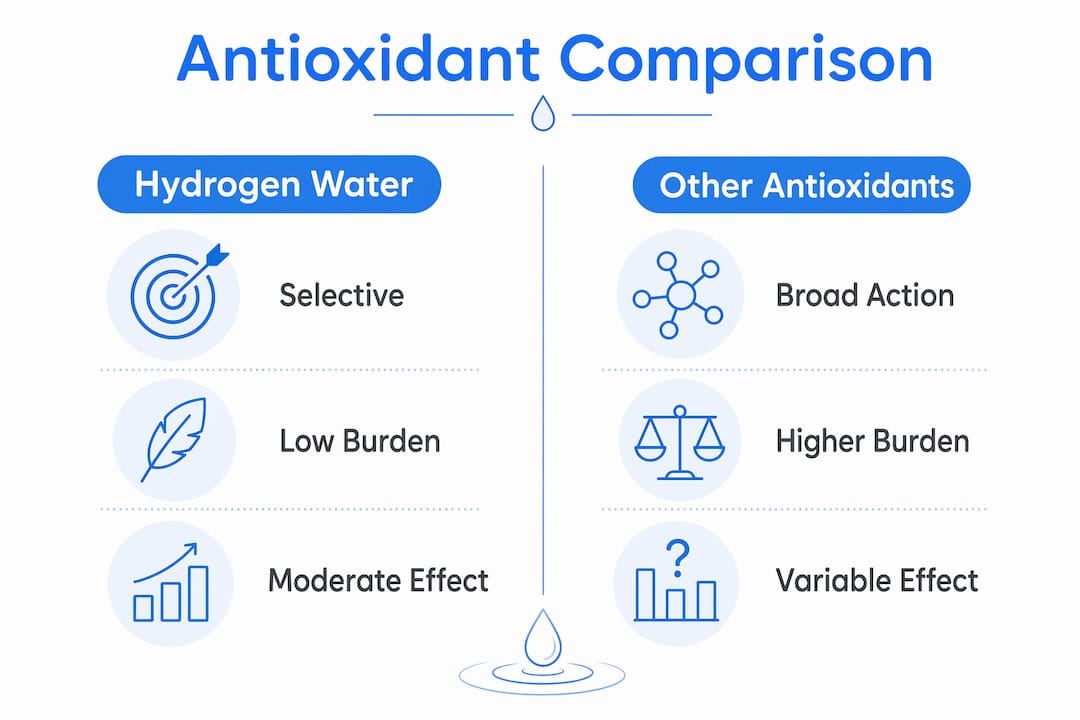
Understanding the advantages of drinking hydrogen water requires placing it honestly against other options. Most antioxidant supplements, including high-dose vitamin C, resveratrol, and N-acetylcysteine, work by broadly neutralizing free radicals. That broad action can interfere with beneficial oxidative processes like exercise adaptation signals. Hydrogen water’s selective mechanism avoids this problem entirely.
For lipid management, hydrogen water produces real but modest effects. Compared to statins or prescription lipid therapies, the cholesterol reductions are not clinically equivalent. But for someone who is not yet at the threshold for medication, or who wants to support their metabolic health naturally alongside diet changes, it fills a gap without side effects.
| Intervention | Mechanism | Evidence for Recovery | Metabolic Effect | Safety Profile |
|---|---|---|---|---|
| Hydrogen water | Selective radical scavenging | Strong (RCT meta-analysis) | Modest lipid reduction | Excellent, FDA GRAS status |
| Vitamin C (high dose) | Broad antioxidant | Mixed | Minimal | Can blunt exercise adaptation |
| Resveratrol | Sirtuin activation, antioxidant | Moderate | Modest | Generally safe, absorption variable |
| NAC | Glutathione precursor | Moderate | Minimal | Generally safe, GI side effects possible |
| Standard statins | HMG-CoA reductase inhibition | Not applicable | Strong lipid lowering | Muscle side effects in some patients |
The advantages of hydrogen water come down to three things: low burden on the body, genuine selectivity in its antioxidant action, and a safety profile that holds up under scrutiny. Hydrogen water has FDA GRAS status, meaning it’s recognized as safe. That matters when you’re already managing a complex health situation and don’t want to add something that creates new problems.
What hydrogen water cannot do is replace foundational habits. Sleep, nutrition, movement, and stress management are the non-negotiables. Hydrogen water works best as a layer on top of those foundations, not as a shortcut around them. For people exploring functional nutrition for chronic illness, this framing matters enormously.
Practical guidance for using hydrogen water in wellness and chronic illness
If you’re going to use hydrogen water seriously, product quality is the first thing to get right. Many commercial hydrogen water products lack sufficient hydrogen concentration to realize biological effects. The threshold for meaningful biological activity is a minimum of 0.5 to 1.0 parts per million (ppm) of dissolved H2. Most bottled hydrogen water products on store shelves fall below this by the time they reach you, because the gas escapes through packaging over time.
Here’s how to approach hydrogen water practically:
- Start with magnesium-based hydrogen tablets. They’re cost-effective, portable, and allow you to prepare fresh hydrogen water on demand. Beginners achieve the best results with tablets before investing in electrolyzer systems.
- Target 1 to 2 servings per day. Most clinical trials used one to two 250 to 500 mL servings daily. More is not necessarily better, and consistency matters far more than volume.
- Time your consumption strategically. Drinking hydrogen water 30 minutes before exercise or immediately after supports the recovery benefits documented in RCT research. For general wellness, morning consumption on an empty stomach maximizes absorption.
- Verify product concentration. Look for products that specify dissolved hydrogen concentration in ppm and use aluminum pouches or pressurized cans rather than plastic bottles, which allow H2 to permeate through the walls.
- Consult your healthcare provider before integrating hydrogen water with active medical treatments. Hydrogen water is classified as a nutritional supplement, not a drug, and should be positioned as an adjunct to your existing care plan.
For those managing conditions like ME/CFS, Lyme disease, or systemic inflammation, the emerging evidence is promising but still pilot-stage. Consistency in consumption is crucial because intermittent use is unlikely to provide significant symptomatic relief in chronic fatigue and inflammatory conditions. The cumulative antioxidant effect builds over weeks, not days. If you’re exploring hydrogen water as part of a broader approach to holistic chronic disease prevention, commit to at least 8 to 12 weeks of consistent use before evaluating results.
Pro Tip: Keep a simple symptom and energy log during your first 12 weeks of hydrogen water use. Chronic illness symptoms fluctuate for many reasons, and a log helps you separate genuine improvement from natural variation. It also gives your healthcare provider something concrete to work with.
Key takeaways
Hydrogen water’s health benefits are real, selective, and most strongly supported in exercise recovery and antioxidant activity, but they require consistent use and adequate dissolved H2 concentration to deliver results.
| Point | Details |
|---|---|
| Selective antioxidant action | Hydrogen targets harmful radicals without disrupting beneficial cellular signaling. |
| Strongest evidence in recovery | A 27-RCT meta-analysis confirms blood lactate reduction and power improvement. |
| Product quality determines results | Effective products require a minimum of 0.5 ppm dissolved hydrogen; many commercial options fall short. |
| Consume within 15 to 30 minutes | Hydrogen gas escapes quickly; delayed consumption significantly reduces biological effect. |
| Adjunct, not a replacement | Hydrogen water supports wellness and chronic illness management alongside, not instead of, medical care. |
Why I think hydrogen water deserves more honest attention
I’ll be straight with you. When I first heard about hydrogen water, I rolled my eyes. It sounded like another wellness gimmick dressed up in science language. But then I started digging into the actual RCT data, and I had to reconsider.
What changed my mind was the selectivity argument. I’ve spent years watching people with Morgellons, Lyme, and related conditions throw every antioxidant supplement imaginable at their symptoms, sometimes making things worse by overwhelming their redox balance. Hydrogen water doesn’t do that. It’s targeted. That’s genuinely different from most of what’s out there.
That said, I want to be honest about the limits. The chronic illness research is still early. Pilot studies are not the same as large-scale trials, and anyone managing a serious condition should not swap out their treatment protocol for a glass of hydrogen water. What I do believe is that for people who are already doing the hard work, the diet, the sleep, the medical treatment, adding hydrogen water as a consistent daily practice is a low-risk, potentially meaningful layer of support.
The biggest mistake I see is inconsistency. People try it for two weeks, feel nothing dramatic, and quit. The biology doesn’t work that way. Oxidative stress reduction is cumulative. Give it real time before you judge it.
— Megan
Support your wellness with Megansmiraclestudio
At Megansmiraclestudio, we know that managing chronic illness means building a protocol that actually works, layer by layer, with products you can trust. Our supplements and internal detox collection features wellness-focused options designed to support antioxidant defense and recovery from the inside out. If you’re drawn to natural compounds with real biological activity, our Snow Mushroom Polysaccharide Capsules offer immune and antioxidant support that pairs well with a hydrogen water practice. We also offer online education courses covering treatment protocols and recovery strategies for complex chronic conditions, because knowledge is part of healing too.
FAQ
What is hydrogen water and how does it differ from regular water?
Hydrogen water is regular water infused with dissolved molecular hydrogen gas (H2) at concentrations of 0.5 ppm or higher. Unlike alkaline or oxygenated water, its health effects come specifically from dissolved H2 acting as a selective antioxidant at the cellular level.
Is hydrogen water good for you if you have a chronic illness?
Hydrogen water is classified as a safe nutritional supplement with FDA GRAS status, and emerging research supports its use as an adjunct for conditions involving oxidative stress and inflammation, including ME/CFS. It should complement, not replace, your existing medical treatment plan.
How much hydrogen water should you drink per day?
Most clinical trials used one to two servings of 250 to 500 mL daily, with consumption timed around exercise or on an empty stomach for best absorption. Consistency over weeks matters more than volume on any single day.
Does the brand of hydrogen water product matter?
Yes, significantly. Many commercial products contain insufficient dissolved hydrogen to produce biological effects. Look for products specifying at least 0.5 to 1.0 ppm dissolved H2, packaged in aluminum pouches or pressurized containers rather than plastic bottles.
Can hydrogen water replace antioxidant supplements?
Hydrogen water works differently from standard antioxidant supplements like vitamin C or resveratrol because it selectively targets only the most harmful free radicals. It can complement your supplement stack but is not a direct replacement for targeted nutritional interventions your healthcare provider recommends.