
Patient isolation is defined as a measurable medical risk factor that directly worsens chronic illness by triggering biological stress responses, systemic inflammation, and psychological decline. This is not just an emotional problem. Research now places social isolation in the same danger category as smoking when it comes to long-term health damage. If you are living with a chronic condition like Morgellons disease, Lyme disease, heart disease, or pulmonary fibrosis, understanding why patient isolation worsens chronic illness could be as important as any medication you take. And if you are a caregiver, recognizing the signs of isolation in the person you support may genuinely save their life.
Why does patient isolation worsen chronic illness biologically?
The body reads loneliness as a threat. When you are isolated for extended periods, your hypothalamic-pituitary-adrenal axis, known as the HPA axis, shifts into a state of chronic activation. That means your body keeps pumping out cortisol and stress hormones even when there is no immediate danger. Over time, this HPA axis dysregulation causes sustained inflammation and metabolic changes including insulin resistance, raising your risk for cardiometabolic disease.
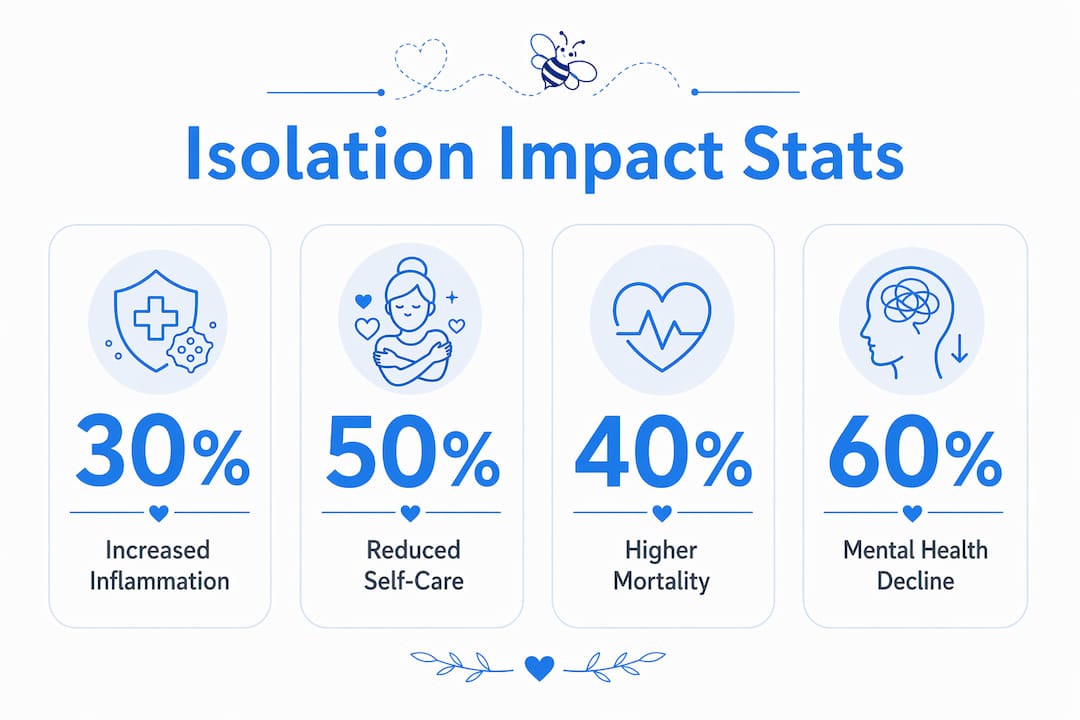
The inflammation piece is not subtle. Chronic inflammation directly worsens cardiovascular disease, pulmonary conditions, and autoimmune disorders. For patients already managing these conditions, isolation does not just add stress. It actively accelerates disease progression at the cellular level. A May 2026 study of 8,935 adults found that high loneliness links to hypertension, heart disease, stroke, and chronic pulmonary disease. That is not correlation. That is a pattern repeated across thousands of real patients.
Here is what makes this even harder to accept: the damage does not stop when you start feeling less lonely. Research shows a recovery lag after loneliness where physiological damage from chronic stress persists long after emotional improvement. Inflammation and autonomic dysregulation require sustained lifestyle changes to reverse. You cannot just reconnect with one friend and expect your body to reset overnight.
The key biological pathways isolation activates include:
- Elevated cortisol from HPA axis overactivation, suppressing immune function and promoting fat storage
- Systemic inflammation that worsens cardiovascular and pulmonary disease progression
- Insulin resistance raising the risk of type 2 diabetes in already vulnerable patients
- Cognitive decline from stress-induced brain wear, affecting memory and decision-making
- Autonomic dysregulation disrupting heart rate variability and sleep quality
Pro Tip: If you or someone you care for has been isolated for months, do not expect a quick biological recovery. Plan for gradual, consistent social reconnection over weeks and months, not days.
How does isolation affect mental health and behavior in chronic illness?
Loneliness is now recognized as a clinical risk factor comparable to smoking or high blood pressure. That framing matters because it shifts the conversation from “you just feel sad” to “your body is under measurable medical stress.” Anxiety, depression, and emotional disengagement follow isolation in a predictable pattern, and they all make chronic illness harder to manage.
The psychological toll shows up in behavior fast. Patients who feel isolated lose motivation for self-care. They skip medications, miss appointments, and stop tracking symptoms. They pull away from the people who could help them most. Research on patients with idiopathic pulmonary fibrosis found that 80% needed psychological support but 23% felt those needs went unmet, accelerating decline through unaddressed social isolation. That gap between need and support is where chronic illness gets worse fast.
Stigma plays a brutal role here. Conditions like Morgellons disease, Lyme disease, and chronic fatigue syndrome carry social stigma that makes patients feel like a burden. So they withdraw. They stop asking for help. They self-isolate due to fatigue and shame, not realizing they are cutting off the instrumental support that keeps them alive and functioning. It is a nightmare cycle.
The psychological risks of isolation in chronic illness build on each other in this order:
- Emotional disengagement sets in first, making it hard to feel connected even when people are present
- Anxiety and depression deepen, reducing energy for any social effort
- Motivation for self-care drops, leading to missed medications and poor symptom tracking
- Social withdrawal increases, cutting off practical help like rides to appointments or meal support
- Altered social identity takes hold, where patients begin to see themselves as permanently separate from healthy life
Pro Tip: Caregivers should watch for the early sign of emotional disengagement, not just physical withdrawal. When a patient stops talking about their interests or future plans, that is often the first warning.
Social isolation vs. loneliness vs. social support: what is the difference?
These three terms get used interchangeably, but they describe very different experiences with different health implications. Getting them straight helps patients and caregivers target the right problem.
Social isolation is objective. It means a person has few social contacts and limited interaction with others. Loneliness is subjective. It is the painful feeling that your social connections are not enough or not meaningful. A patient can be physically surrounded by family and still feel profoundly lonely. Conversely, someone living alone may feel deeply connected through regular phone calls, online communities, or chronic illness support communities. Both states carry health risks, but they require different responses.
Social support is the third piece. It refers to the quality and usefulness of the connections a person has, including emotional support, practical help, and a sense of belonging. Research consistently shows that perceived quality of support matters more than the raw number of social contacts. Ten acquaintances who do not understand your illness do less for your health than two close friends who show up reliably.
| Concept | Definition | Health implication |
|---|---|---|
| Social isolation | Objective lack of social contact | Raises inflammation, cardiovascular risk, and cognitive decline |
| Loneliness | Subjective feeling of inadequate connection | Triggers HPA axis dysregulation and depression |
| Social support | Quality and usefulness of existing connections | Buffers stress, improves treatment adherence, reduces mortality risk |
| Stigma-driven withdrawal | Self-imposed isolation due to shame or fear of burdening others | Accelerates physical decline by removing instrumental support |
Illness symptoms alter social networks in ways patients rarely anticipate. Fatigue, pain, and unpredictable flares make it hard to maintain friendships. Over time, social networks shrink. The impact of isolation on health then compounds because patients lose both emotional and practical support at the same time.
What strategies actually reduce isolation’s impact on chronic illness?
Experts now recommend viewing social connection as a form of treatment, not a luxury. The framing matters because it gives patients and caregivers permission to prioritize connection the same way they prioritize medication or physical therapy. Social prescriptions are formal clinical recommendations for social engagement, and they are gaining traction in chronic disease management.
The most effective approach combines social and physical activity together. Systematic reviews from early 2026 show that social-plus-physical interventions produce better psychological and clinical outcomes for cardiovascular patients than either approach alone. A gentle walk with a neighbor beats a solo gym session and a phone call separately. The combination addresses both the biological and emotional pathways that isolation damages.
For patients dealing with fatigue, the key is keeping social engagement low-energy and sustainable. Research on pulmonary fibrosis patients confirms that brief, low-energy interactions like short phone calls or quiet shared activities prevent complete social withdrawal better than infrequent large gatherings. You do not need a dinner party. You need a ten-minute call three times a week.
Practical strategies that work for fatigued patients include:
- Structured peer support groups focused on specific conditions like Lyme disease or Morgellons, where shared experience reduces stigma immediately
- Digital platforms and online communities that allow connection without physical energy demands
- Regular, brief contact with one or two trusted people rather than sporadic large social events
- Caregiver-facilitated social moments, where caregivers help create low-effort connection opportunities
- Patient advocacy approaches that teach patients to communicate their social needs to both healthcare providers and family
Remember the recovery lag. Even after you start reconnecting, your body needs time to reduce inflammation and rebalance stress hormones. Long-term habit change, not a single social event, is what reverses the biological damage. Pair social reconnection with 2026 treatment approaches that address both physical and emotional health together.
Key Takeaways
Patient isolation worsens chronic illness through measurable biological pathways including HPA axis dysregulation, systemic inflammation, and metabolic changes that persist long after emotional recovery begins.
| Point | Details |
|---|---|
| Isolation is a medical risk | Social isolation carries health risks comparable to smoking, raising cardiovascular and pulmonary disease risk. |
| Biological damage persists | Recovery lag means inflammation and stress hormone damage continue even after patients feel less lonely. |
| Loneliness and isolation differ | Loneliness is subjective; isolation is objective. Each requires a different clinical response. |
| Low-energy connection works | Brief, frequent interactions prevent withdrawal better than infrequent large social events for fatigued patients. |
| Social prescriptions are real | Clinicians now recommend structured social engagement as a formal part of chronic disease management. |
What I have learned about isolation that most health articles miss
I have watched isolation do its worst work quietly. It does not announce itself. It creeps in through cancelled plans, unanswered texts, and the slow decision to stop explaining your illness to people who do not get it. By the time you realize how alone you are, the biological damage is already weeks or months deep.
What frustrates me most is how rarely healthcare providers screen for isolation the way they screen for blood pressure or blood sugar. We know the stress-related cognitive decline from isolation harms brain health and immunity. We know it is as dangerous as smoking. And yet most patients leave appointments without a single question about their social life.
If you are a caregiver, please do not wait for the person you support to ask for help connecting. They probably will not. Fatigue and shame make asking feel impossible. You have to notice the withdrawal and gently create the opportunity. A short walk together, a quiet cup of tea, a five-minute call. That is not small. That is medicine.
And if you are the patient, I want you to know this: pulling away to protect others from your illness is one of the most painful and counterproductive things you can do. You need people. Not to fix you. Just to be there. That connection is doing real biological work inside your body, whether you feel it or not.
— Megan
Natural support for chronic illness from Megansmiraclestudio
Addressing isolation is one piece of the puzzle. Your body also needs physical support to recover from the inflammation and immune disruption that chronic illness and prolonged stress create.
At Megansmiraclestudio, the supplements and internal detox collection is built specifically for patients managing complex chronic conditions like Morgellons disease and Lyme disease. These products target inflammation reduction and immune health, working alongside the social and lifestyle changes that research says matter most. The Medical Grade Bee Venom Therapy Kit offers an adjunct approach to pain and immune modulation grounded in apitherapy. When you combine physical health support with genuine social connection, you give your body the best possible conditions to recover.
FAQ
What makes social isolation as dangerous as smoking?
Social isolation carries health risks comparable to smoking 15 cigarettes a day, raising the risk of hypertension, heart disease, stroke, and chronic pulmonary disease. The biological mechanisms include HPA axis dysregulation, chronic inflammation, and metabolic changes that directly worsen existing conditions.
Can loneliness worsen chronic illness even with people around?
Yes. Loneliness is subjective and can occur even when a patient is surrounded by others. If the connections feel meaningless or unsupportive, the body still registers the stress of perceived isolation, triggering the same harmful biological responses.
How long does it take to recover from the effects of isolation?
Recovery takes longer than most patients expect. Biological damage from isolation including inflammation and autonomic dysregulation persists after emotional improvement, requiring sustained lifestyle changes over months to reverse.
What is the best type of social connection for fatigued patients?
Brief, low-energy interactions like short phone calls or quiet shared activities are more sustainable and effective than large social gatherings. Consistency matters more than intensity for patients managing chronic fatigue.
Should doctors screen for social isolation in chronic illness patients?
Experts now call for routine clinical screening for social isolation, treating it as a formal medical risk factor similar to blood pressure or cholesterol. Social prescriptions are an emerging clinical tool for managing isolation in chronic disease care.