

A healing home environment for chronic illness is a biologically intentional space designed to reduce sensory stress, regulate the nervous system, and support physiological repair. This isn’t about pretty decor or trendy wellness aesthetics. It’s about deliberately controlling the variables your body cannot fight through willpower alone: light, temperature, air quality, sound, and clutter. Concepts like the therapeutic space from House Remedy and the WELL Building Standard both confirm what many of us living with chronic illness already feel in our bones. Your home either works for your healing or against it. There is no neutral.
What are the key environmental factors for a healing space in chronic illness?
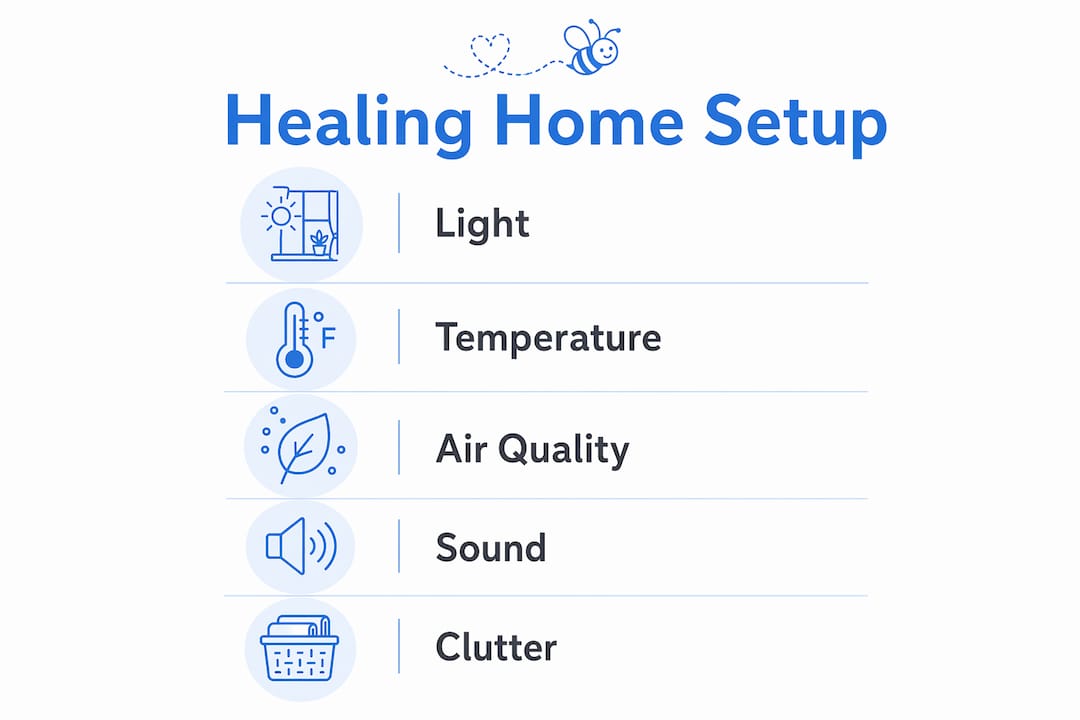
Healing space design starts with five variables. Get these right, and your home stops draining you. Get them wrong, and no supplement or protocol can fully compensate.
Light is the most powerful circadian signal your body receives. Bright, blue-spectrum light during the day supports alertness and hormonal rhythm. In the evening, the same light suppresses melatonin and delays sleep onset. For those of us managing conditions like Morgellons, Lyme disease, or autoimmune disorders, disrupted sleep is not just uncomfortable. It actively blocks immune repair. Powering down screens 60 to 120 minutes before bed and switching to amber-spectrum lamps in the evening protects melatonin production and supports the sleep architecture your body desperately needs.
Temperature matters more than most people realize. Chronic illness often comes with autonomic dysfunction, which means your body struggles to self-regulate heat. A cool, stable bedroom temperature between 60°F and 68°F is not a luxury preference. It is a physiological requirement for quality sleep and symptom control.
Air quality is the silent variable. Most people assume opening a window or adding a houseplant solves the problem. It does not. The WELL Building Standard treats indoor air as a system requiring ventilation, filtration, pollutant source control, and ongoing measurement. That framework applies directly to your home.
Sound is a stress trigger most people underestimate. Background noise, even at low levels, keeps the nervous system in a low-grade alert state. Soft furnishings like rugs, curtains, and cushions absorb ambient sound and reduce that physiological load.
Clutter is not just an aesthetic problem. Visual clutter elevates cortisol and disrupts sleep. That means the pile of laundry on the chair is not just annoying. It is actively interfering with your recovery.
Pro Tip: Start your environmental audit with one room. Trying to fix your whole home at once leads to overwhelm and nothing getting done. The bedroom is always the right first target.
How to set up a therapeutic bedroom for maximum sleep quality
The bedroom is the single most important room for anyone managing chronic illness. Sleep is when your immune system consolidates its work, your nervous system resets, and your body repairs tissue. A bedroom that undermines sleep undermines everything else you are doing.
Here is a staged approach adapted from adaptive bedroom design principles for chronic illness and disability:
- Control darkness first. Install blackout curtains or use a sleep mask. Even small amounts of light through eyelids suppress melatonin. This is the cheapest and highest-impact change you can make.
- Set your temperature. Keep the room between 60°F and 68°F. If you have temperature-triggered flares or fatigue, place your thermostat control or a smart plug within arm’s reach of your bed so you can adjust without getting up.
- Add HEPA air filtration. A HEPA filter removes particulates, allergens, and some VOCs that trigger respiratory symptoms and systemic inflammation. Place it near the bed, not across the room.
- Switch to layered, warm lighting. Replace overhead bulbs with warm amber-spectrum dimmable lamps. Layered lighting reduces migraine and dizziness triggers and signals the brain that sleep is approaching.
- Declutter with a 10-minute nightly routine. Research shows that 10 minutes of nightly decluttering improves sleep onset and reduces middle-of-the-night awakenings within two weeks. Set a timer. Do not aim for perfect. Aim for calmer.
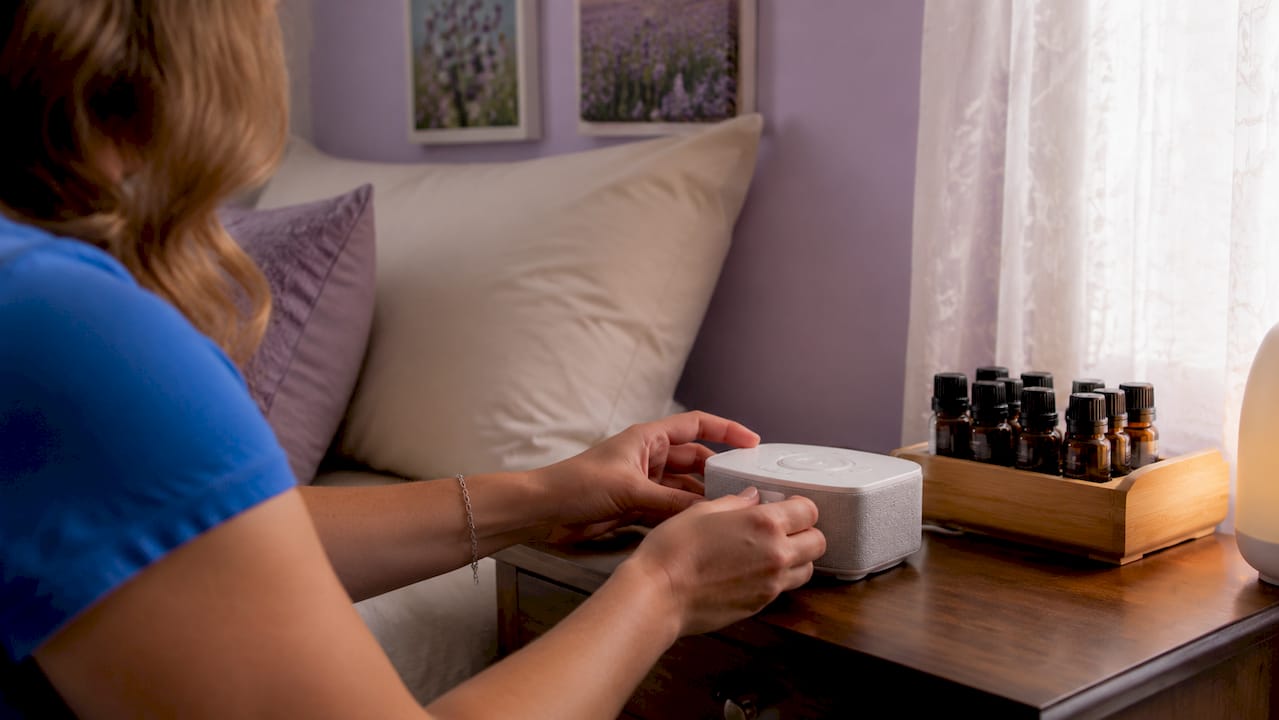
- Add sound management. A white noise machine or a nature sounds app masks disruptive noise without adding visual clutter. Pair this with heavy curtains and a rug to absorb sound from inside the room.
- Install adaptive safety features. Grab bars near the bed, motion-activated night lighting for bathroom trips, and reachable climate controls are not just for severe disability. They conserve the energy that your body needs for healing.
Pro Tip: Natural textiles like organic cotton or linen for bedding reduce chemical off-gassing and skin irritation, which matters enormously for those of us with Morgellons or Lyme-related skin sensitivity.
| Bedroom element | Why it matters for chronic illness |
|---|---|
| Blackout curtains or sleep mask | Protects melatonin production and supports deep sleep stages |
| Temperature 60°F to 68°F | Reduces autonomic stress and temperature-triggered symptom flares |
| HEPA air filtration | Removes particulates and allergens that trigger inflammation |
| Amber-spectrum dimmable lighting | Prevents migraine triggers and supports circadian signaling |
| Nightly 10-minute declutter | Lowers cortisol and reduces nighttime awakenings |
How to integrate nature and sensory calm into your living spaces
Your bedroom handles sleep. Your living spaces handle the rest of your waking hours, and those hours carry their own physiological weight. The goal here is what researchers call restorative environments: spaces that allow the nervous system to recover from the constant effort of managing chronic illness.
Nature is the most powerful restorative tool available. Roger Ulrich’s landmark study found that window views of trees measurably reduced pain medication use and sped recovery in clinical patients. If you do not have a nature view, high-quality nature photography on your walls produces a measurable cortisol reduction. This is not wishful thinking. It is documented biology.
Beyond views, consider these principles for your living spaces:
- Natural materials in decor. Wood, stone, linen, and wool engage the senses in ways that synthetic materials do not. They also tend to off-gas fewer chemicals, which matters for air quality.
- Fractal geometry. Natural patterns like wood grain, leaf shapes, and flowing water contain fractal geometry that the human visual system processes with less cognitive effort than hard geometric lines. Incorporating natural patterns in art, textiles, or plants reduces visual fatigue.
- Acoustic softness. Rugs, upholstered furniture, curtains, and cushions absorb sound and reduce the harshness of a hard-surfaced room. A softer acoustic environment lowers the physiological stress load throughout the day.
- Soothing sound. Nature recordings, a small indoor fountain, or birdsong audio during the day engage the parasympathetic nervous system. This is the branch of your autonomic nervous system responsible for rest and repair.
- Calming color choices. Soft blues, greens, and warm neutrals are associated with lower arousal states. Avoid high-contrast, saturated colors in rooms where you rest or recover.
- Meaningful objects. Photographs, art, or objects that carry positive emotional associations activate the brain’s reward circuits. A space that feels personally meaningful is more restorative than a clinically sterile one.
“Biological function, not aesthetics, should drive home environment design. Spaces must produce measurable physiological benefits on the nervous, hormonal, and immune systems.” — House Remedy
Spatial order matters too. Clutter in living spaces carries the same cortisol-elevating effect as bedroom clutter. You do not need a minimalist showroom. You need enough order that your brain is not constantly processing visual noise. Check out these holistic chronic disease strategies for how environmental design fits into a broader recovery approach.
What tools can help you monitor and maintain your home healing environment?
Guessing whether your air is clean or your room is the right temperature is not a strategy. Measurement is. This is exactly what the WELL Building Standard demands of commercial spaces, and the same logic applies at home. The good news is that monitoring tools are now affordable and accessible.
Air quality monitors like the Airthings Wave or IQAir AirVisual Pro measure CO2, particulate matter (PM2.5), VOCs, humidity, and radon. High CO2 alone causes fatigue and brain fog, symptoms that overlap with and worsen chronic illness. Knowing your CO2 level is above 1,000 ppm tells you to open a window. That is a concrete, measurable intervention.
Smart plugs and automated lighting remove the cognitive and physical effort of managing your environment when you are exhausted. A smart plug on your HEPA filter runs it on a schedule. Philips Hue or LIFX bulbs shift automatically from cool daylight to warm amber at sunset, supporting your circadian rhythm without any daily decision-making.
Pro Tip: Place a small thermometer and hygrometer on your bedside table. Humidity between 40% and 60% reduces respiratory irritation and dust mite populations. Both matter for chronic illness.
| Tool | What it measures | Why it matters |
|---|---|---|
| Airthings Wave or similar | CO2, VOCs, humidity, radon | Identifies invisible air quality problems causing fatigue |
| Smart lighting system | Automated color temperature shift | Supports circadian rhythm without daily effort |
| Bedside thermometer and hygrometer | Temperature and humidity | Confirms sleep environment stays within therapeutic range |
| White noise machine | Ambient sound masking | Reduces physiological stress from disruptive noise |
Air quality interventions work as a system. Ventilation, filtration, source control, and monitoring must all work together. Removing a source of VOCs (like synthetic air fresheners or off-gassing furniture) is more effective than adding a filter to compensate for it. For those of us dealing with Morgellons or Lyme, reducing the total toxic burden in our environment is not optional. It is part of the protocol. Explore functional nutrition for chronic illness alongside these environmental strategies for a more complete recovery picture.
Key takeaways
Creating a healing home environment for chronic illness requires controlling five measurable variables: light, temperature, air quality, sound, and clutter, starting with the bedroom as the highest-impact room.
| Point | Details |
|---|---|
| Bedroom is the priority room | Optimize darkness, temperature, air, and lighting here before any other space. |
| Clutter is a biological stressor | Ten minutes of nightly decluttering reduces cortisol and improves sleep onset within two weeks. |
| Air quality needs a system | Combine ventilation, HEPA filtration, source control, and monitoring rather than relying on plants alone. |
| Nature reduces cortisol | Window views or high-quality nature photography measurably lower stress hormones and support recovery. |
| Measurement beats guessing | Affordable monitors for CO2, particulates, temperature, and humidity confirm your environment is actually therapeutic. |
What I’ve learned about healing spaces that nobody tells you
I spent years trying to heal my body while living in an environment that was quietly working against me. Harsh overhead lighting at night, a bedroom that was too warm, synthetic air fresheners masking real air quality problems. I thought I was doing everything right with supplements and protocols. I was not addressing the container I was living in.
The shift that changed things was not a dramatic overhaul. It was starting with one room and going deep instead of spreading thin. I fixed the bedroom first. Blackout curtains, a HEPA filter, amber lamps, and a nightly 10-minute tidy. Within two weeks, I was sleeping longer and waking up less. That alone gave me enough energy to tackle the next room.
What I want you to understand is that this is not about perfection. Your healing space does not need to look like a spa. It needs to work for your specific body and your specific triggers. Someone with Morgellons has different sensory sensitivities than someone managing fibromyalgia. There is no one-size-fits-all setup. Start with the science, then personalize ruthlessly.
The mental shift matters as much as the physical changes. When you start treating your home as a refuge rather than just a place you happen to live, something changes in how you move through it. You become more protective of it. You stop tolerating the things that drain you. That protective instinct is part of healing too. Read through these patient advocacy tips if you want practical ways to extend that same protective energy into your medical care.
— Megan
How Megansmiraclestudio supports your healing environment
Your home environment is the container. What you put inside your body is the fuel. At Megansmiraclestudio, we believe both have to work together for real recovery to happen.

If you are building a healing space at home, pairing that work with internal detox and immune support makes a measurable difference. Our supplements and detox products are formulated specifically for people managing complex chronic conditions like Morgellons and Lyme disease, where the toxic burden is high and the immune system is under constant pressure. For those exploring apitherapy as part of their recovery, our bee venom therapy protocol integrates naturally with an environment designed to support healing. You can also explore our Stage 1 recovery protocol for a structured approach that connects environmental and internal healing strategies.
FAQ
What does a healing home environment for chronic illness include?
A healing home environment for chronic illness includes controlled lighting, stable cool temperature, HEPA-filtered air, reduced noise, and minimal clutter. These five variables directly affect nervous system regulation, sleep quality, and immune function.
What temperature should a bedroom be for chronic illness recovery?
The bedroom temperature for chronic illness recovery should stay between 60°F and 68°F. This range supports sleep architecture and reduces autonomic stress, particularly for those with temperature-triggered symptom flares.
How does clutter affect chronic illness symptoms?
Visual clutter elevates cortisol and disrupts sleep by keeping the brain in a low-grade alert state. A 10-minute nightly decluttering routine can improve sleep onset and reduce nighttime awakenings within two weeks.
Do nature views actually help with chronic illness recovery?
Yes. Roger Ulrich’s research showed that nature views measurably reduced pain medication use and sped recovery. High-quality nature photography produces a similar cortisol-lowering effect when a window view is not available.
What air quality tools are worth using at home?
Monitors like the Airthings Wave measure CO2, VOCs, humidity, and radon at low cost. Pairing a monitor with a HEPA filter, proper ventilation, and source control of pollutants creates the air quality system that WELL Building Standard principles recommend for healthy indoor environments.