
Mind-body chronic illness healing approaches are defined as structured techniques that engage both mental and physical processes to reduce symptoms, regulate the nervous system, and build resilience in people living with long-term health conditions. The clinical term for this field is psychosomatic medicine, though practitioners also use “mind-body medicine” interchangeably. Practices like Cognitive Behavioral Therapy (CBT), Mindfulness-Based Stress Reduction (MBSR), somatic therapies, and progressive muscle relaxation each target the connection between thought, emotion, and physical health. For people managing conditions like Morgellons Disease, Lyme disease, ME/CFS, fibromyalgia, or Long Covid, these approaches do not replace medical care. They work alongside it, giving your body and nervous system a real fighting chance.
1. What are the most effective mind-body therapy techniques for chronic illness?
CBT and Mindfulness-Based Interventions have the strongest clinical evidence for improving chronic condition outcomes, particularly when delivered in groups over at least 8 weeks with 8 or more contact hours. That structure matters because the nervous system needs repeated, consistent input to shift out of threat mode. A single session does almost nothing. Eight weeks of group practice changes patterns.
Somatic therapies go a step further by working directly with physical sensations stored in the body. Techniques like vagal toning, which stimulates the vagus nerve through humming, cold water exposure, or slow exhales, move the body from hyper-arousal toward rest. Limbic system retraining programs, such as the Dynamic Neural Retraining System (DNRS), target the brain’s threat-detection center directly.
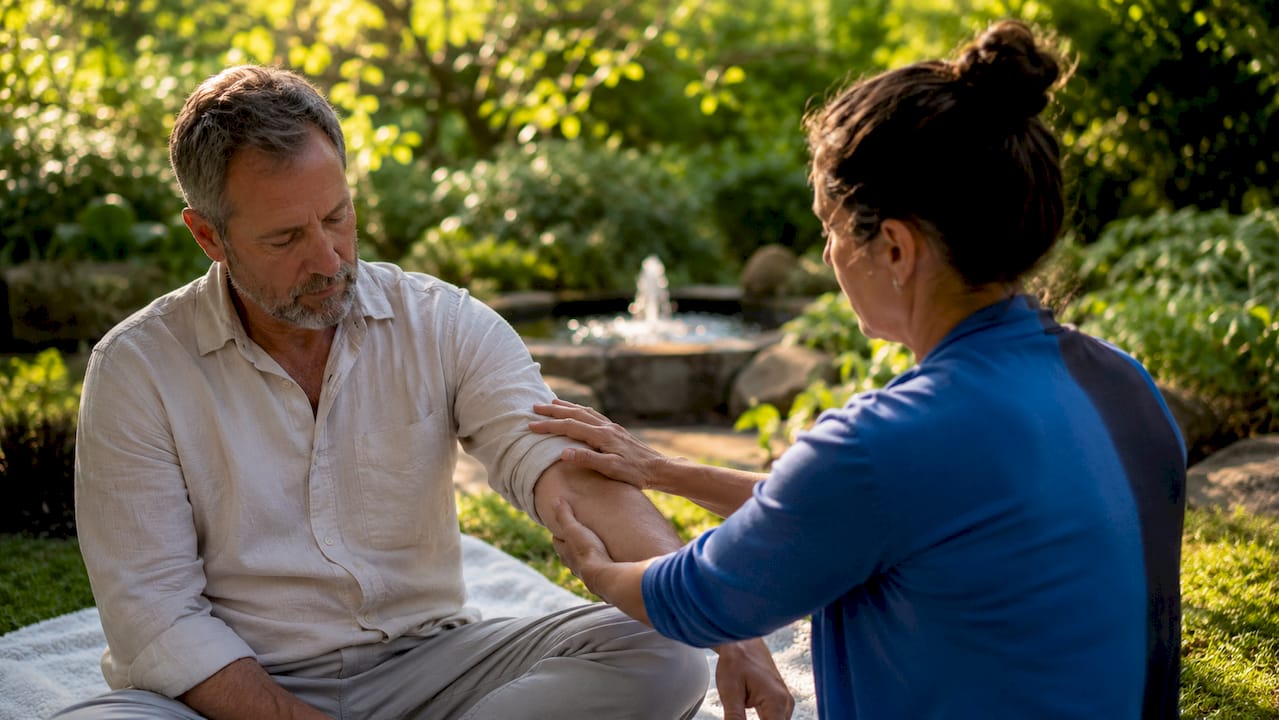
Meditation and hypnosis are gaining traction in clinical settings because early research links these practices to biological changes, including increased BDNF, a protein that supports brain adaptability and pain modulation. That means these are not just relaxation tools. They may physically reshape how your brain processes pain signals.
Deep breathing, progressive muscle relaxation, and guided imagery round out the toolkit. These are zero-cost, require no equipment, and can be practiced anywhere.
- CBT: Restructures unhelpful thought patterns that amplify pain perception
- MBSR: An 8-week program developed by Jon Kabat-Zinn at the University of Massachusetts Medical School
- Somatic therapy: Works with physical sensation and body memory, not just cognition
- Vagal toning: Activates the parasympathetic nervous system through breath and sound
- Hypnosis: Accesses subconscious pain pathways and supports nervous system flexibility
- Progressive muscle relaxation: Systematically tenses and releases muscle groups to reduce physical tension
Pro Tip: Consistency beats intensity every time. Five to ten minutes of daily practice rewires the nervous system more effectively than one long session per week.
2. How combining multiple healing practices enhances recovery
Single-target interventions consistently underperform for complex chronic illness. The reason is simple: conditions like ME/CFS, Long Covid, and fibromyalgia involve overlapping dysregulations across the immune, endocrine, and nervous systems. Fixing one thread does not untangle the whole knot.
Multimodal strategies that address nutrition, sleep, energy pacing, and nervous system regulation simultaneously produce synergistic healing effects. Each system supports the others. Better sleep improves nervous system resilience. Better nervous system regulation reduces inflammation. Reduced inflammation improves sleep. The cycle works in your favor when you address all of it together.
Integrating mind-body practices with medical care also prevents the trap of abandoning one for the other. You do not have to choose. A good functional medicine provider will support both. If yours does not, functional nutrition for chronic illness is a solid place to start building the nutritional foundation that makes everything else work better.
Here is a practical sequence for building a multimodal approach:
- Start with sleep: No mind-body practice compensates for chronic sleep deprivation. Prioritize sleep hygiene first.
- Add body awareness: Practice noticing physical sensations without judgment before attempting breath regulation.
- Introduce breath work: Use the 4-7-8 pattern or box breathing once body awareness feels stable.
- Layer in CBT or journaling: Address the cognitive patterns that amplify symptoms.
- Add group support: Chronic illness support communities reduce isolation and reinforce practice consistency.
- Incorporate nutrition and pacing: Energy pacing prevents post-exertional crashes that derail progress.
Pro Tip: Learn to notice internal bodily sensations, a skill called body awareness, before attempting advanced regulation techniques. Skipping this step is the most common reason people stall.
3. Simple daily techniques you can start today
The most accessible mind-body practices cost nothing and take less than 15 minutes. Deep breathing, meditation, and yoga are among the most commonly used complementary tools for symptom management, with deep breathing practiced by a significant portion of people managing chronic conditions. These are not fringe ideas. They are mainstream, evidence-backed, and free.
The 4-7-8 breathing pattern works like this: inhale for 4 counts, hold for 7, exhale for 8. The long exhale activates the parasympathetic nervous system, which is the body’s rest-and-repair mode. Progressive muscle relaxation pairs well with this. You tighten a muscle group for 5 seconds, then release completely, moving from feet to face. The contrast between tension and release teaches your body what actual relaxation feels like.
Journaling is underrated as a clinical tool. Tracking symptom fluctuations through daily logs helps identify subtle triggers, whether dietary, environmental, or emotional, and supports individualized symptom management. You can explore symptom journaling for chronic illness as a structured starting point.
| Technique | Primary purpose | Key benefit |
|---|---|---|
| 4-7-8 breathing | Nervous system regulation | Activates rest-and-repair mode quickly |
| Progressive muscle relaxation | Physical tension release | Teaches body to distinguish tension from rest |
| Mindfulness meditation | Attention and pain modulation | Reduces reactivity to pain signals over time |
| Symptom journaling | Trigger identification | Reveals patterns invisible to memory alone |
- Practice breathing exercises before getting out of bed in the morning
- Keep a journal by your bed and write for 5 minutes before sleep
- Use a body scan meditation app like Insight Timer or Calm for guided sessions
- Set a phone alarm labeled “breathe” as a daily reminder
4. What experts say about challenges and realistic expectations
Chronic illness traps the body in a state of neurological threat, and regulated mind-body therapies help lower systemic inflammation by improving nervous system resilience. That is a meaningful clinical outcome. But it is not a cure, and pretending otherwise sets people up for crushing disappointment.
The most common pitfall is misreading numbness as relaxation. Body awareness is a prerequisite skill. You need to distinguish genuine physical ease from emotional shutdown before breath work and muscle relaxation can do their job. Many people skip this step and then conclude that mind-body work “does not work for them.” It does. They just started in the wrong place.
Healing from chronic illness is not linear. Flares happen. Bad weeks happen. The goal is not to eliminate every symptom immediately. The goal is to build a nervous system that recovers faster and suffers less between flares.
“Nervous system regulation work is fundamentally about creating safety and moving the body from hyper-arousal to rest, where natural healing mechanisms can operate.” — The Roadmap for Treating Chronic Illness
Mental health care and physical symptom management are not separate tracks. Anxiety and depression are common in chronic illness, not because patients are weak, but because the nervous system is exhausted. Addressing psychological resilience through CBT or evidence-based behavioral therapy reduces the emotional load that amplifies physical pain. You are not imagining it. The connection is biological.
Holistic chronic disease prevention strategies in 2026 increasingly reflect this reality, with practitioners recommending integrated care plans that treat mind and body as one system, not two separate problems.
Key takeaways
The most effective mind-body chronic illness healing approaches combine nervous system regulation, consistent daily practice, and multimodal strategies targeting sleep, nutrition, and emotional resilience together.
| Point | Details |
|---|---|
| CBT and MBSR lead the evidence | Group-based programs lasting 8+ weeks produce the strongest outcomes for chronic illness. |
| Consistency over intensity | Five to ten minutes daily rewires the nervous system better than occasional long sessions. |
| Multimodal care outperforms single treatments | Addressing sleep, nutrition, and nervous system regulation together produces synergistic results. |
| Body awareness comes first | Learning to notice internal sensations is a prerequisite before advanced regulation techniques. |
| Journaling reveals hidden triggers | Symptom logs identify dietary, environmental, and emotional patterns that worsen flares. |
What I have learned about healing that nobody tells you
Living with a chronic illness is a nightmare that most people cannot understand unless they have been through it themselves. I know that feeling of despair when nothing seems to work, when your body feels like it has betrayed you completely. What I have found, through my own awful experience and through watching others recover, is that the mind-body connection is not a soft, feel-good concept. It is real, it is biological, and it is one of the most powerful tools you have.
The thing that changed everything for me was accepting that healing is not a straight line. I used to chase perfection. I would do everything right for a week, crash, and then feel like I had failed. That thinking kept me stuck. The truth is that a bad day does not erase your progress. Your nervous system is still learning, even when it does not feel like it.
I also want to be honest with you: mind-body work is not a replacement for medical treatment. It is a partner to it. When I combined consistent daily practices with the right physical protocols, that is when I started to see real, lasting change. Not overnight. But real. If you are just starting out, do not try to do everything at once. Pick one practice, do it for five minutes a day, and give it eight weeks before you judge it. Your nervous system needs time, not perfection.
— Megan
How Megansmiraclestudio supports your healing journey
Megansmiraclestudio was built for people who are done being dismissed and ready to fight back. Mind-body practices are a powerful foundation, but your body also needs physical support to heal from the inside out.
The supplements and internal detox collection at Megansmiraclestudio is designed to complement the nervous system and immune support work you are doing through mind-body practices. Products like the Snow Mushroom Polysaccharide Capsules support immune and systemic function, giving your body the biological resources it needs to respond to healing. When your mind-body practices are working and your body has the right nutritional support, recovery becomes possible in ways that feel genuinely miraculous.
FAQ
What are mind-body healing approaches for chronic illness?
Mind-body healing approaches are structured techniques, including CBT, mindfulness, somatic therapy, and breathing exercises, that engage mental and physical processes to reduce symptoms and regulate the nervous system in people with chronic illness.
How long does it take for mind-body therapy to work?
Group-based programs lasting at least 8 weeks with regular contact hours show the strongest outcomes. Consistent daily practice of 5–10 minutes accelerates results more than occasional intensive sessions.
Can mind-body practices replace medical treatment for chronic illness?
Mind-body practices support but do not replace medical treatment. They reduce inflammation, improve nervous system resilience, and enhance coping capacity alongside conventional or alternative medical care.
What is the easiest mind-body technique to start with?
The 4-7-8 breathing pattern is the most accessible starting point. It requires no equipment, takes under two minutes, and immediately activates the parasympathetic nervous system to reduce stress and pain.
Why does body awareness matter before advanced techniques?
Body awareness is a prerequisite skill that allows you to distinguish genuine relaxation from emotional numbness. Without it, breath work and muscle relaxation techniques cannot function effectively.