
Propolis is a natural resin produced by honeybees, rich in flavonoids and phenolic compounds, that delivers antimicrobial, anti-inflammatory, and antioxidant effects across in vitro, animal, and human clinical settings. If you are searching for propolis health properties explained in plain language, you are in the right place. This article covers what propolis actually does in the body, what the clinical research confirms, how formulation affects its power, and what safety risks you need to know before you start. The goal is to give you a clear, honest picture so you can make a real decision about whether propolis belongs in your wellness routine.
What are the main health properties of propolis and how do they work?
Propolis works through several biological mechanisms at once, which is what makes it so different from single-compound supplements. Its power comes from a dense mix of flavonoids, phenolic acids, and terpenoids that act on multiple targets in the body simultaneously.
The antimicrobial action of propolis is well documented. Its bioactive compounds disrupt bacterial cell membranes, inhibit fungal growth, and interfere with viral replication. This makes propolis relevant not just for infections but for conditions where microbial imbalance plays a role in chronic inflammation.
On the anti-inflammatory side, propolis modulates key signaling pathways including NF-κB and the NLRP3 inflammasome, both of which drive the kind of persistent, low-grade inflammation linked to chronic disease. It also activates Nrf2, the body’s master antioxidant switch, which increases production of protective enzymes like superoxide dismutase (SOD). That is a meaningful distinction. Most antioxidant supplements simply donate electrons. Propolis tells your cells to make their own antioxidants.
Propolis also supports immune function by regulating cytokine output and reinforcing barrier integrity in tissues. This is why researchers and apitherapy practitioners view it as an immunomodulator rather than just an antimicrobial agent. The combination of immune and oxidative stress regulation is what positions propolis as a genuinely multi-mechanism natural compound.
Key biological actions of propolis include:
- Antimicrobial: Active against bacteria, fungi, and viruses through membrane disruption and enzyme inhibition
- Anti-inflammatory: Suppresses NF-κB and NLRP3 inflammasome pathways to reduce cytokine overproduction
- Antioxidant: Activates Nrf2 signaling to boost the body’s own protective enzyme systems
- Immunomodulatory: Regulates cytokine balance and supports mucosal barrier function
- Wound healing: Promotes tissue repair by reducing oxidative damage and inflammatory markers at wound sites
Pro Tip: If you are comparing propolis to a standard vitamin C supplement, think of it this way. Vitamin C is a single antioxidant molecule. Propolis is a signaling compound that triggers your cells to produce multiple antioxidant defenses at once.
What does current clinical research say about propolis health benefits?
The 2026 body of research on propolis is more specific than most natural remedy literature. Clinical trials support propolis as an adjunct or alternative therapy across several conditions, not as a cure-all, but as a meaningful addition to treatment protocols.
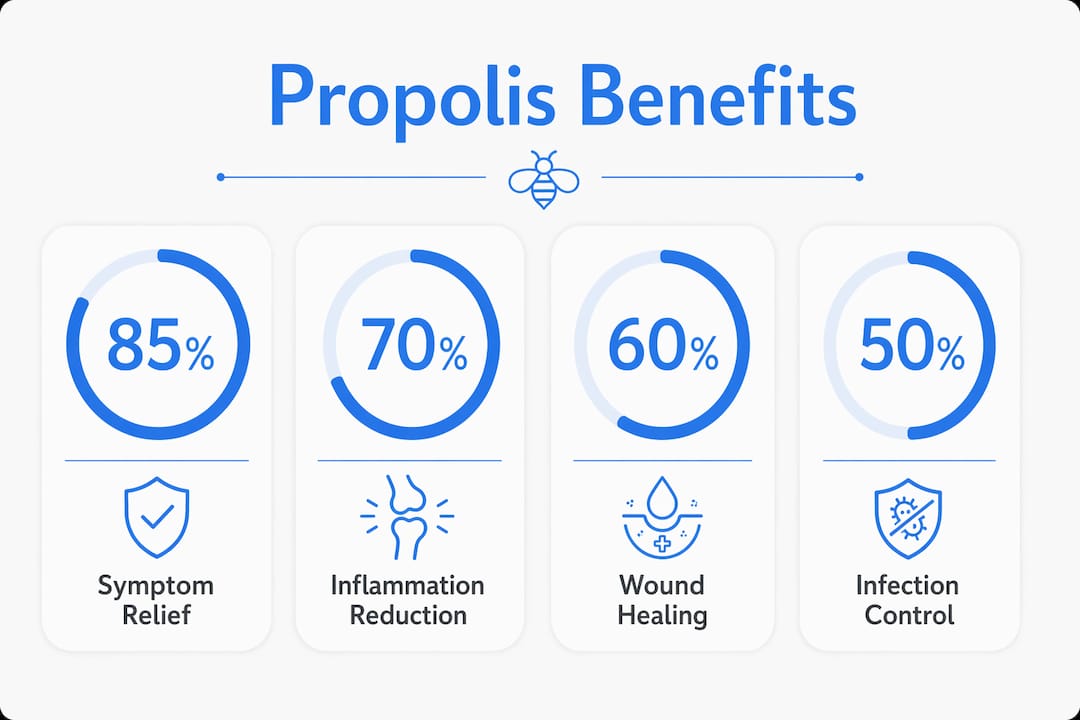
One of the most compelling recent trials involves oral mucositis in head and neck cancer patients undergoing radiotherapy. A 15% propolis solution used four times daily, with 20 drops diluted in 50 mL of water and swished then swallowed, delayed the onset of severe oral mucositis. That matters enormously for cancer patients, because oral mucositis is one of the most painful and debilitating side effects of radiotherapy. Propolis did not eliminate it, but it bought patients more time before the worst of it hit.
Wound healing research tells a similar story. A topical propolis nanoemulgel reduced oxidative stress markers including malondialdehyde (MDA) and tumor necrosis factor alpha (TNF-α), while increasing SOD activity and improving tissue histology at day 14 in animal studies. Separately, a propolis cream combined with cyanobacteria-mediated TiO₂ nanoparticles showed highest epithelialization rates and lowest inflammation markers in the treatment group at day 14 in a Candida albicans wound model. A randomized dental trial is also testing 0.5% propolis gel for sensitivity and color change after tooth bleaching, showing propolis’s reach into oral care.
| Condition studied | Propolis form | Key outcome |
|---|---|---|
| Oral mucositis (radiotherapy) | 15% solution, 4x daily | Delayed onset of severe mucositis |
| Wound healing (animal model) | Nanoemulgel topical | Reduced MDA, TNF-α; improved histology at day 14 |
| Fungal wound infection | Propolis + TiO₂ nanoparticle cream | Highest epithelialization, lowest inflammation at day 14 |
| Dental sensitivity post-bleaching | 0.5% propolis gel | Under active clinical evaluation |
Pro Tip: When you read propolis research, check whether the study is in vitro (cell culture), in vivo (animal), or a human clinical trial. All three matter, but only human trials tell you what propolis actually does in a living person under real conditions.
How do propolis formulations and extraction methods affect its efficacy?
Not all propolis products are equal. This is the part of propolis health properties explained that most wellness articles skip entirely, and it is the part that determines whether you actually get results.
Propolis composition varies significantly depending on the botanical plants bees collect resin from. European propolis differs chemically from Brazilian green propolis, which differs again from stingless bee propolis found in tropical regions. Bioactivities vary greatly between water and ethanol extracts of the same propolis source, with ethanol extracts generally showing stronger antiviral and anticancer activity. Water extracts tend to be gentler and better tolerated for oral use.
| Extraction method | Strengths | Limitations |
|---|---|---|
| Ethanol extract | Higher antiviral and anticancer bioactivity | Alcohol content limits use for some people |
| Water extract | Gentler, better for oral and mucosal use | Lower potency for some bioactivities |
| Nanoemulsion or nanoparticle | Enhanced skin retention, permeation, stability | Requires specialized manufacturing |
Nanoformulations represent the most significant advance in propolis delivery. Nanoformulations significantly enhance propolis stability, skin retention, and anti-inflammatory activity compared to crude extracts. This is not marketing language. The histology data from wound studies shows measurable differences in tissue repair outcomes between standard and nanoformulated propolis. For topical skin health applications, the delivery vehicle matters as much as the propolis itself.
The practical takeaway is straightforward. Standardized extracts with a defined concentration of active compounds outperform generic propolis products with no stated bioactive content. Delivery method and dose standardization directly impact efficacy for immune support and wound healing. Buying the cheapest propolis tincture on the shelf is unlikely to replicate the outcomes seen in clinical trials.
What safety risks should you know before using propolis?
Propolis is generally well tolerated, but it carries real allergy risks that deserve honest attention. Allergic contact dermatitis is the most commonly reported adverse reaction, particularly in people already sensitive to bee products, beeswax, or tree resins.
Populations with elevated risk include:
- People with known bee sting allergies or bee product sensitivities
- Those with asthma, eczema, or seasonal allergies, who show higher rates of propolis sensitivity
- Individuals taking blood thinners such as warfarin, since propolis may affect bleeding risk
- Pregnant or breastfeeding women, for whom safety data remains limited
- Anyone scheduled for surgery within two weeks, due to potential effects on clotting
Allergy screening and interaction checks are the primary safety steps recommended by clinical and pharmacovigilance experts before starting propolis. If you have any of the above risk factors, talk to your doctor or pharmacist before adding propolis to your routine. You can also find practical guidance on allergy risk and precautions for bee-derived therapies through Megansmiraclestudio’s apitherapy resources.
Topical propolis products carry a lower systemic risk than oral forms, but skin patch testing before full application is a sensible first step for anyone with sensitive skin or a history of contact dermatitis.
How can you incorporate propolis safely into your wellness routine?
Propolis works best as a complementary adjunct, not a replacement for medical treatment. That framing matters. It sets realistic expectations and keeps you from abandoning something genuinely useful because it did not perform miracles on its own.
- Choose standardized products. Look for propolis extracts that list a defined percentage of active flavonoids or total phenolics. Unstandardized products have no guarantee of potency.
- Match the form to your goal. For immune support and oral health, tinctures or capsules are the most practical options. For skin health and wound care, topical creams or gels, ideally with nanoformulation technology, deliver better localized results.
- Follow research-validated dosing where possible. The oral mucositis trial used a 15% propolis solution four times daily. That level of specificity matters. Dosing schedules validated in research produce more consistent outcomes than guesswork.
- Patch test before topical use. Apply a small amount to the inner forearm and wait 24 hours before using propolis on larger skin areas.
- Integrate it with professional guidance. If you are managing a chronic condition, read about integrating alternative therapies alongside conventional care before making changes to your protocol.
Common product forms include capsules, alcohol-based tinctures, water-based sprays, and topical creams or gels. Each has a different absorption profile and best-use context. Pairing propolis with other natural antioxidants, such as the compounds found in mushroom-based supplements, may support broader immune and antioxidant coverage. Similarly, combining propolis with anti-inflammatory foods creates a more complete natural wellness approach.
Key Takeaways
Propolis delivers genuine, research-supported health benefits through multiple biological mechanisms, but its real-world efficacy depends on product quality, formulation type, and appropriate dosing.
| Point | Details |
|---|---|
| Multi-mechanism action | Propolis targets antimicrobial, anti-inflammatory, antioxidant, and immune pathways simultaneously. |
| Clinical evidence exists | Human trials support propolis as an adjunct therapy for oral mucositis and wound healing. |
| Formulation determines results | Ethanol extracts and nanoformulations outperform generic crude propolis for most applications. |
| Allergy risk is real | Screen for bee product sensitivity and check medication interactions before starting propolis. |
| Adjunct, not a cure | Propolis works best alongside, not instead of, conventional medical care for serious conditions. |
Why I think most people are using propolis wrong
I have spent years deep in the world of apitherapy, and propolis is one of those things that people either dismiss entirely or treat like a magic bullet. Both reactions miss the point completely.
What I have found is that propolis is genuinely powerful, but only when you respect its complexity. The research is clear that propolis as adjunctive therapy works best when it is part of a broader protocol, not a standalone fix. I have seen people buy the cheapest propolis drops at a health food store, use them inconsistently for two weeks, and then declare that propolis does not work. That is not a fair test. Concentration, extraction method, and dosing schedule all shape the outcome.
The allergy concern is also real and worth taking seriously. I am not trying to scare you off propolis. I am saying that if you have any history of bee product sensitivity, you need to check with your doctor first. That is not a disclaimer. That is genuine care for your safety.
What I love about propolis is that it works on multiple levels at once. It is not just an antimicrobial. It is not just an antioxidant. It is a compound that talks to your immune system, your oxidative stress response, and your tissue repair processes all at the same time. When you find a quality, standardized product and use it consistently at the right dose, the results can be real and meaningful. Especially for people dealing with chronic conditions where inflammation and immune dysfunction are central to the suffering.
— Megan
Natural apitherapy products at Megansmiraclestudio
Megansmiraclestudio carries a curated range of apitherapy supplements and natural wellness products built around the same evidence-based principles covered in this article. The focus is on quality formulations for people dealing with serious chronic conditions, not generic health store products with no standardization. You can browse the full supplements and detox collection to find propolis-based and complementary natural options. Every product is selected with the kind of person in mind who has already done the research and knows that quality matters. If you want to understand the broader apitherapy framework that propolis fits into, the about apitherapy page is a solid starting point.
FAQ
What is propolis and what is it good for?
Propolis is a resin produced by honeybees from plant sources, rich in flavonoids and phenolics. It is used for immune support, wound healing, oral health, and antimicrobial protection based on clinical and preclinical research.
How does propolis work in the body?
Propolis activates antioxidant signaling through Nrf2, suppresses inflammatory pathways including NF-κB and NLRP3, and disrupts microbial cell membranes. These combined actions make it an immunomodulatory and tissue-protective compound.
Does propolis have proven clinical benefits?
Yes. Human clinical trials support propolis as an adjunct therapy for conditions including oral mucositis in cancer patients and wound healing, with a 15% solution used four times daily showing delayed onset of severe mucositis in radiotherapy patients.
Can propolis cause allergic reactions?
Propolis is a known cause of allergic contact dermatitis, especially in people sensitive to bee products, asthma, eczema, or seasonal allergies. Always patch test topical products and consult a healthcare provider before oral use.
What propolis form is most effective?
Ethanol extracts show stronger antiviral and anticancer bioactivity, while nanoformulations deliver superior results for topical skin and wound applications. Standardized extracts with defined active compound percentages consistently outperform generic products.