

Integrative medicine is defined as a healthcare approach that combines conventional medical treatment with evidence-based complementary therapies to treat the whole person, including mind, body, and spirit. If you’ve been living with a chronic condition and feel like standard medicine only addresses half of what you’re going through, you’re not imagining things. The Merck Manual defines this model as one that uses all appropriate therapeutic approaches within a framework focused on health, the therapeutic relationship, and the whole person. The World Health Organization describes it as an interdisciplinary, evidence-based care model combining biomedical and traditional medical knowledge. This is not fringe medicine. It is a structured, coordinated system of care.
What is integrative medicine vs. complementary and alternative care?
These three terms get mixed up constantly, and the confusion can cost you. Understanding the difference matters before you make any care decisions.
Complementary medicine is used alongside conventional treatment. You might take prescribed antibiotics and also use acupuncture to manage pain. Both happen at the same time, but they are not formally coordinated.
Alternative medicine is used instead of conventional care. This is where real risk lives. Choosing an unproven herbal protocol over a doctor-recommended treatment for a serious condition is alternative medicine, and MedlinePlus is clear that this distinction matters because the two approaches carry very different safety profiles.
Integrative medicine is the coordinated use of both. A clinician actively manages which complementary therapies you use, how they interact with your conventional treatment, and whether the evidence supports them. That coordination is what separates integrative medicine from simply stacking supplements on top of a prescription.

Here is a quick comparison to make this concrete:
| Approach | Used With Conventional Care? | Clinician Coordinated? | Evidence Standard |
|---|---|---|---|
| Complementary Medicine | Yes | Sometimes | Variable |
| Alternative Medicine | No | Rarely | Often unverified |
| Integrative Medicine | Yes | Always | Evidence-based |
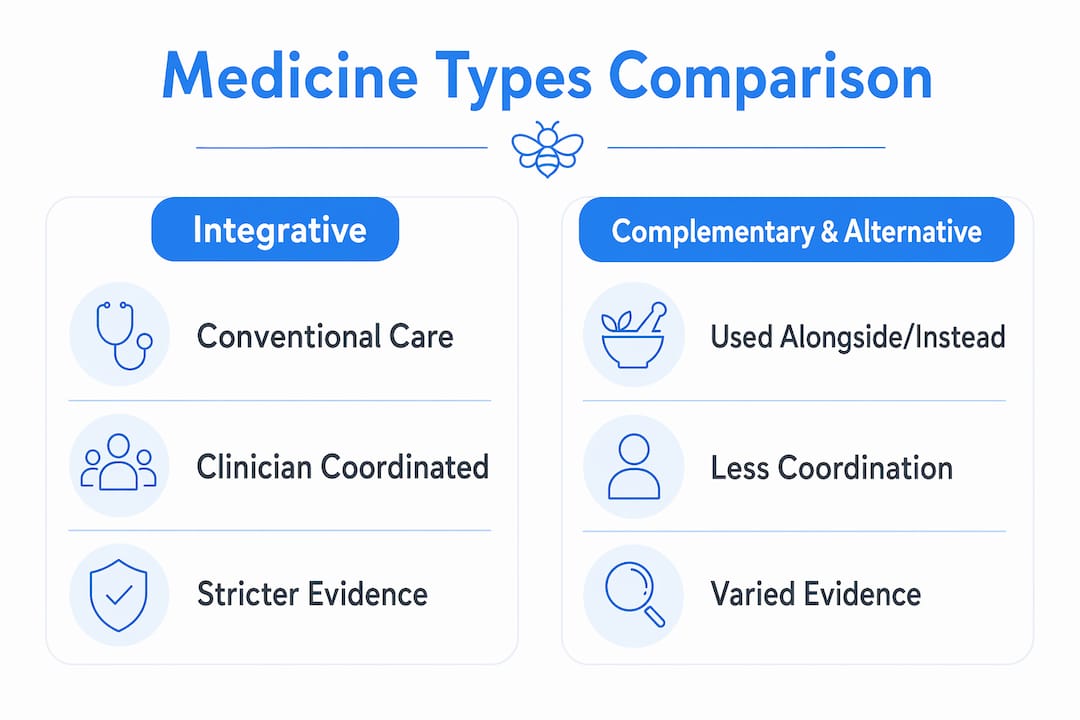
The MSD Manual makes the point directly: integrative medicine holds stricter evidence standards than general complementary and alternative medicine (CAM) practices. That accountability is the defining feature.
What therapies are used in integrative medicine?
Common integrative approaches span a wide range of modalities, all used alongside mainstream treatments rather than replacing them. The specific therapies chosen depend on your condition, your goals, and the evidence supporting each option.
Frequently used integrative therapies include:
- Acupuncture: Used for pain management, nausea, and fatigue, particularly in cancer care and chronic illness
- Herbal and dietary supplements: Chosen based on documented safety profiles and interactions with existing medications
- Massage therapy: Applied for stress reduction, pain relief, and circulation support
- Meditation and mindfulness: Evidence supports their use for anxiety, depression, and chronic pain
- Yoga and tai chi: Used for mobility, balance, and mental health in patients with long-term conditions
- Aromatherapy: Used as a supportive tool for mood and symptom relief, not as a primary treatment
- Nutritional therapy: Personalized dietary plans that address inflammation, gut health, and immune function
None of these therapies work in isolation. The integrative model treats them as tools in a larger plan, not standalone cures. A patient managing Lyme disease, for example, might use antibiotic therapy from their physician alongside targeted nutritional support and acupuncture for joint pain. The key is that a clinician knows about all of it.
Pro Tip: Before starting any supplement or complementary therapy, review our guide on talking to your doctor about alternative treatments. Herb-drug interactions are real, and your prescribing physician needs the full picture.
What principles guide integrative medicine?
The WHO framework makes clear that integration is not simply co-using therapies. It is a systems-level model requiring documented coordination between complementary and mainstream medicine. That distinction matters enormously for patients who have tried “doing both” without a plan.
The core principles that guide integrative medicine in clinical practice are:
- Whole-person focus. Physical symptoms are only part of the picture. Emotional health, social circumstances, and spiritual wellbeing all factor into the treatment plan. A patient with fibromyalgia, for instance, may need support across all four of those domains simultaneously.
- Therapeutic relationship. The Merck Manual emphasizes that the clinician-patient relationship is central to this model. The practitioner coordinates symptoms, lifestyle, and behavior, not just prescriptions.
- Evidence-based selection. Every therapy included in an integrative plan should have scientific support. This is what separates integrative medicine from wellness trends. The Mayo Clinic describes this as combining the best researched treatments from both conventional and complementary areas.
- Personalized treatment plans. No two patients receive the same plan. Age, diagnosis, lifestyle, and personal values all shape which therapies are appropriate. You can read more about personalized health approaches and how bio-optimization strategies apply to this model.
- Interdisciplinary safety focus. Integrative care often involves multiple providers, including physicians, nutritionists, physical therapists, and mental health professionals. Coordination between them is not optional. It is the mechanism that keeps the model safe.
Understanding these principles helps you ask better questions when you meet with a provider. If a practitioner cannot explain the evidence behind a recommended therapy, that is a red flag.
What are the benefits and limitations of integrative medicine?
The benefits of integrative medicine are most clearly documented in chronic illness management. Research supports its use for conditions including cancer, ongoing pain, and fibromyalgia, where it improves symptom management and quality of life alongside mainstream treatments. That is a meaningful outcome for anyone who has spent years feeling like their suffering is only partially addressed.
Documented benefits include:
- Reduced pain and fatigue in chronic conditions
- Improved emotional wellbeing and stress management
- Better patient engagement and adherence to treatment
- Support for immune function through nutrition and lifestyle interventions
- Reduced reliance on high-dose pharmaceuticals in some cases
The limitations are equally real and worth knowing upfront. Not every complementary therapy has strong clinical evidence behind it. Insurance coverage for integrative services remains inconsistent across the United States, which creates access barriers. And the MSD Manual warns directly that many CAM therapies are ineffective or potentially harmful without clinician oversight. Self-stacking unvalidated therapies is one of the most common and dangerous mistakes patients make.
For those dealing with complex chronic conditions like Morgellons Disease or Lyme disease, the stakes are especially high. You deserve a holistic chronic disease approach grounded in evidence, not desperation.
Pro Tip: When searching for an integrative medicine provider, look for practitioners affiliated with academic medical centers or those certified through the American Board of Integrative Medicine (ABOIM). These credentials signal both clinical training and accountability to evidence standards.
Key takeaways
Integrative medicine works because it combines evidence-based conventional and complementary therapies under coordinated clinician oversight, treating the whole person rather than isolated symptoms.
| Point | Details |
|---|---|
| Clear definition matters | Integrative medicine is clinician-coordinated care combining conventional and complementary therapies, not simply using both at once. |
| Evidence standards are strict | Unlike general CAM, integrative medicine requires scientific support for every therapy included in a patient’s plan. |
| Chronic illness benefits are documented | Conditions like cancer, fibromyalgia, and chronic pain show improved outcomes with coordinated integrative care. |
| Clinician oversight is non-negotiable | Self-managing complementary therapies without professional guidance increases the risk of harmful interactions. |
| Personalization drives outcomes | Treatment plans are built around individual diagnosis, lifestyle, and goals, not a one-size approach. |
Why i believe integrative medicine is the framework we needed all along
I spent years watching people I care about suffer through conditions that conventional medicine kept treating as isolated symptoms. The pain was real. The exhaustion was real. And the feeling of being dismissed, of having your whole experience reduced to a lab result, was devastating.
What integrative medicine gave me was a framework that finally made sense. It said: you are not just a diagnosis. You are a person with a body, a history, a spirit, and a life that all need tending. That shift in perspective changed everything for me.
I will be honest with you, though. Not every practitioner who calls themselves “integrative” is operating with the rigor this model demands. I have seen people spend thousands of dollars on unproven protocols sold under the integrative label. The holistic health approach only works when it is grounded in real evidence and real accountability.
The most important thing I have learned is this: ask for the evidence. Every single time. A good integrative practitioner will welcome that question. They will not be offended. They will pull out the research and walk you through it. That is the standard you deserve.
Integrative medicine is not a miracle cure. But for those of us living with conditions that conventional medicine struggles to fully address, it is the most honest and complete model of care I have found.
— Megan
How Megansmiraclestudio supports your integrative health path
If you are exploring integrative care for a chronic condition, the products and resources at Megansmiraclestudio are built with exactly that framework in mind.
Megansmiraclestudio offers natural supplements and internal detox products designed to support your body alongside whatever conventional treatment you are already receiving. The apitherapy line, including the medical grade bee venom kit, is grounded in documented research on bee venom therapy for pain and immune support. Snow mushroom polysaccharide products round out a range built for people who need more than a standard pharmacy shelf can offer. Every product comes with educational resources so you understand what you are using and why. That is integrative thinking in practice.
FAQ
What is the integrative medicine definition in simple terms?
Integrative medicine combines conventional medical treatments with evidence-based complementary therapies under clinician coordination, treating the whole person rather than individual symptoms alone.
How does integrative medicine work in a clinical setting?
A clinician builds a personalized treatment plan that includes both mainstream and complementary therapies, actively managing interactions, evidence standards, and patient safety throughout the process.
Is integrative medicine effective for chronic conditions?
The Mayo Clinic confirms that integrative medicine improves symptom management and quality of life for patients with chronic conditions including cancer, ongoing pain, and fibromyalgia when used alongside conventional care.
What is the difference between integrative and alternative medicine?
Integrative medicine is used with conventional treatment under clinician oversight. Alternative medicine is used instead of conventional care, which carries significantly higher safety risks.
How do i find a qualified integrative medicine provider?
Look for practitioners certified through the American Board of Integrative Medicine (ABOIM) or affiliated with academic medical centers, and always ask them to explain the evidence supporting each recommended therapy.