
Chronic illness support communities are structured groups where patients, caregivers, and health seekers share experiences, coping strategies, and emotional encouragement to reduce the isolation that long-term illness creates. Finding the right one is not a luxury. It is one of the most practical things you can do for your health. Organizations like NAMI, Mayo Clinic, and Mental Health America have built frameworks that prove peer connection improves outcomes. This guide walks you through every step of finding chronic illness support communities that actually fit your life, your condition, and your emotional needs.
What types of chronic illness support communities exist?
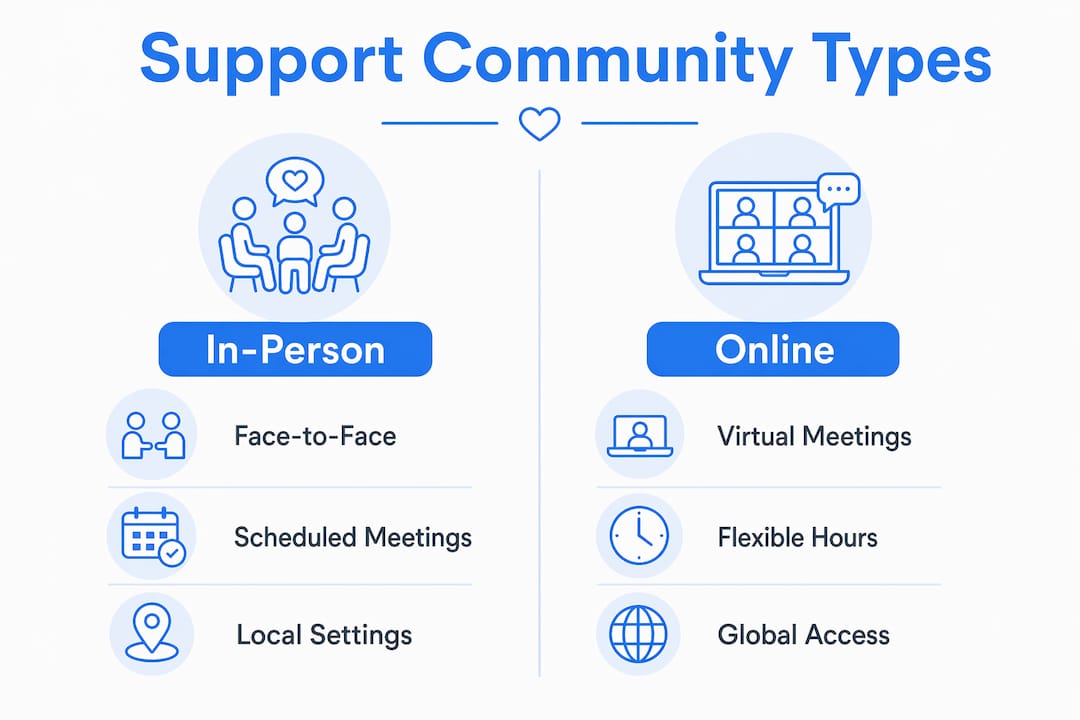
Support communities for chronic illness fall into three broad formats, and knowing the difference saves you from wasting time in the wrong room.
In-person groups meet at hospitals, community centers, or faith-based spaces on a set schedule. They offer face-to-face connection and are often embedded in clinical referral networks, which means clearer pathways for crisis support when things get really bad. Groups in clinical networks reduce search fatigue and manage emergency protocols more reliably than independent groups. That matters when you are already exhausted.
Online groups operate through video platforms, private Facebook groups, Reddit communities, and dedicated forums. They remove geography as a barrier, which is huge if you have a rare condition like Morgellons Disease or late-stage Lyme disease and live somewhere that has never heard of either. Online platforms can enhance well-being by providing acceptance and connection, but monitoring your emotional response is non-negotiable.

Hybrid groups blend both formats, often running weekly video calls with occasional in-person meetups. These tend to attract people who want structure without being locked into one location.
Beyond format, groups also differ by focus. Condition-specific groups center on one diagnosis, like lupus, fibromyalgia, or Lyme disease. Demographic-specific groups serve caregivers, parents of sick children, or young adults separately. Holistic health communities focus on natural and integrative approaches alongside conventional care. Here is a quick comparison to help you decide:
| Type | Best for | Watch out for |
|---|---|---|
| In-person, professionally led | Crisis-prone situations, new diagnosis | Limited scheduling flexibility |
| Peer-led online (e.g., NAMI Connection) | Ongoing emotional support, rare conditions | Moderation quality varies widely |
| Condition-specific forums | Targeted information, treatment experiences | Risk of misinformation without moderation |
| Holistic health communities | Integrative approaches, caregiver support | May lack clinical referral pathways |
| Hybrid groups | Flexibility plus structure | Inconsistent attendance can disrupt trust |
Pro Tip: Before committing to any group, attend two or three sessions as a silent observer if the format allows it. You will learn more about group culture in one quiet session than in any description on a website.
Where do you find trustworthy chronic illness support groups?
The best place to start is your own healthcare team. Your doctor, specialist, or hospital social worker often knows which local and online chronic illness support groups are reputable. Mayo Clinic recommends consulting healthcare professionals and nonprofit advocacy groups to locate groups that fit your specific condition, stage, and life circumstances. That specificity matters because a general chronic illness group will not serve someone managing Morgellons the same way a condition-focused community will.
Beyond your doctor, here are the most reliable sources for finding patient support groups:
- NAMI (National Alliance on Mental Illness): NAMI Connection offers free, confidential peer-led groups with trained facilitators. These are structured, weekly, and available both in-person and online. NAMI Greater Cleveland, for example, runs a chronic illness-specific group with set meeting times and explicit confidentiality rules.
- Mental Health America: Their website includes directories and guides for finding healthy online communities with practical advice on evaluating group culture before joining.
- NIH and CDC: Both agencies maintain directories of patient advocacy organizations sorted by condition. These are not flashy, but they are reliable starting points for rare and complex diseases.
- Hospital social work departments: Many large hospital systems run their own support groups or maintain curated referral lists. Ask directly. Most social workers are glad someone asked.
- Nonprofit disease organizations: Groups like the Arthritis Foundation, Lupus Foundation of America, and similar bodies run national networks with local chapters and online forums.
- Online directories and community boards: Platforms like Inspire.com and PatientsLikeMe aggregate condition-specific communities. Reddit hosts active chronic illness subreddits, though moderation quality varies significantly.
Before you join any group, ask these questions directly: Who moderates the group? Is there a confidentiality policy? What happens if a member is in crisis? How long has the group been running? The answers tell you whether the group is built to last or just loosely assembled.
You can also read more about patient advocacy for chronic illness to understand how nonprofits like NAMI connect patients to the right resources.
How do you evaluate emotional safety and community fit?
Finding a group is step one. Knowing whether it is actually safe for you is step two, and most people skip it entirely.
Mental Health America advises identifying your values and setting clear boundaries before engaging with any online community. No perfect safe space exists online, but you can find communities where you feel respected and accepted. That standard is not too high. It is the minimum.
Signs of a healthy chronic illness support group include:
- Trained or experienced facilitators who redirect harmful conversations
- Explicit confidentiality agreements that members acknowledge
- A culture of listening, not just venting
- Clear rules about medical advice (peer groups share experiences, they do not prescribe)
- Consistent meeting schedules that signal organizational stability
Signs of an unhealthy group include members who dismiss your symptoms, moderators who are absent or reactive rather than proactive, and a culture where one or two voices dominate every conversation. NAMI’s structured model specifically addresses unequal participation by using trained peer facilitators, which is one reason it works where informal groups often fail.
For online groups specifically, moderation and confidentiality practices are the first things to evaluate. Explicit rules prohibiting recording and clear guidelines on device use reduce privacy risks significantly. If a group does not have these policies written down somewhere, that is a red flag.
Pro Tip: Give yourself a trial period of four weeks before deciding a group is right for you. Track how you feel after each session. If you consistently leave feeling worse than when you arrived, that group is not serving you, regardless of how well-intentioned it is.
Community fit is also dynamic. Mental Health America notes that ongoing boundary-setting and emotional self-monitoring are required for healthy long-term engagement. Your needs will change as your illness evolves, and the group that helped you in year one may not be the right fit in year three.
How to get the most out of chronic illness support communities
Joining is not the same as participating, and participating is not the same as benefiting. Here is how to make your time in any support group actually count:
- Set a clear intention before each session. Decide whether you are going to listen, share, or ask a specific question. Showing up without a purpose leads to passive attendance, which rarely helps anyone.
- Share experiences, not diagnoses. Describe what you went through and how you felt. Avoid framing your story as medical advice for others. Peer-led groups like NAMI Connection focus on coping skills and mutual support, not treatment endorsement. That boundary protects everyone.
- Keep your healthcare team in the loop. Mayo Clinic emphasizes that support groups complement medical care, they do not replace it. Tell your doctor you are participating. Some providers will want to know what information you are receiving.
- Use the group to complement holistic approaches. If you are exploring apitherapy, functional nutrition, or other integrative strategies, a support community can be a place to share what is working. Pairing peer support with resources like holistic disease prevention strategies creates a fuller picture of care.
- Watch for burnout. Chronic illness communities can be emotionally intense. If you find yourself dreading sessions, skipping self-care to attend, or absorbing others’ pain to the point of exhaustion, pull back. Sustainable participation means protecting your own energy first.
- Rotate between formats. Use an online forum for daily check-ins and an in-person or video group for deeper connection. Different formats serve different emotional needs, and using both prevents over-reliance on one source of support.
Key takeaways
Finding the right chronic illness support community requires matching group format, focus, and safety standards to your specific condition, emotional needs, and stage of illness.
| Point | Details |
|---|---|
| Start with your healthcare team | Doctors and hospital social workers know which local and online groups are reputable for your condition. |
| Prioritize moderation and confidentiality | Evaluate any group’s privacy policies and facilitator training before your first session. |
| Use structured programs first | NAMI Connection and similar peer-led models reduce common group pitfalls through trained facilitation. |
| Treat community fit as ongoing | Your needs change as your illness evolves, so reassess group fit every few months. |
| Balance peer support with medical care | Support groups complement professional healthcare but never substitute for it. |
What I have learned about finding the right community
I will be honest with you. When I was deep in the nightmare of Morgellons, the last thing I wanted to do was sit in a circle and talk about my feelings. I was exhausted, skeptical, and frankly terrified that no one would believe me. That fear kept me isolated for longer than it should have.
What changed my mind was not a perfect group. It was a structured one. NAMI Connection’s model, with its trained facilitators and explicit confidentiality, gave me something informal groups never could: a sense that the space was actually held. Someone was paying attention to the room. That made it safe enough to speak.
What I wish I had known earlier is that you do not have to commit to a group to learn from it. Attend quietly. Ask hard questions before you share anything personal. And please, do not stop seeing your doctor because a group member swears by something else. Peer support and medical care are not in competition. They work together, and the best outcomes I have seen come from people who use both without apology.
Your needs will shift. The group that feels right at diagnosis may feel suffocating two years later. That is not failure. That is growth. Be patient with yourself, and be willing to move on when a community stops serving you.
— Megan
How Megansmiraclestudio supports your chronic illness journey
Living with a chronic condition like Morgellons or Lyme disease means you need more than emotional support. You need tools that work with your body, not against it.
Megansmiraclestudio offers a curated collection of supplements and internal detox products designed specifically for people managing complex chronic conditions. These are not generic wellness products. They are formulated with apitherapy and natural healing in mind, built for people who have already tried everything else. Pair them with the peer support strategies in this guide, and you are building something real. You can also explore online education courses that explain treatment protocols, ingredient science, and recovery strategies in plain language. Because understanding what you are putting in your body is part of healing too.
FAQ
What is a chronic illness support community?
A chronic illness support community is a group of patients, caregivers, or health seekers who meet regularly to share experiences, coping strategies, and emotional encouragement. These groups exist in-person, online, and in hybrid formats.
How do I find a reputable chronic illness support group?
Start by asking your doctor or hospital social worker for referrals, then check organizations like NAMI, Mental Health America, and the NIH patient advocacy directories. Mayo Clinic recommends verifying that any group suits your specific condition and life stage before joining.
Are online chronic illness support groups safe?
Online groups can be safe when they have trained moderators, written confidentiality policies, and explicit rules against recording sessions. Moderation and privacy safeguards are the first things to check before sharing anything personal in a digital space.
Can a support group replace my doctor?
No. Peer-led support groups focus on coping skills and shared experience, not medical treatment. They are designed to complement professional healthcare, not substitute for it.
How do I know if a support group is the right fit for me?
Track how you feel after each session for at least four weeks. Healthy groups leave you feeling heard and less alone. If you consistently leave feeling worse, dismissed, or overwhelmed, the group is not the right fit regardless of its reputation.