
Informed consent in natural therapies is the structured process through which a practitioner discloses the nature, risks, benefits, and alternatives of a treatment so you can make a free and fully informed decision. This is not just a signature on a form. It is an ongoing conversation that protects both you and the person treating you. Whether you are exploring apitherapy, herbal medicine, Ayurveda, or any other complementary approach, understanding what is informed consent in natural therapies is the first step toward safe, ethical care. Recent legal changes in Texas and India have pushed this process into sharper focus, making it more relevant than ever for patients and caregivers in 2026.
What is informed consent in natural therapies?
Informed consent in natural therapies is the formal industry term for what many patients simply call “getting the full picture before you say yes.” The process requires your practitioner to share specific, honest information before any treatment begins. It covers what the therapy does, what it cannot do, what could go wrong, and what other options exist.
The core purpose is patient autonomy. You have the right to accept or refuse any treatment based on complete information. Four bioethical principles guide this process: autonomy, beneficence, non-maleficence, and justice. These are the same principles that govern conventional medicine, which means natural therapy practitioners carry the same ethical weight as any physician.

Regulatory bodies are catching up fast. Texas and India both implemented formal documentation requirements for complementary and alternative medicine (CAM) consent in 2025 and 2026 respectively. Texas now mandates a line-by-line disclosure form for CAM therapies. India requires written consent and adverse-event reporting for Siddha therapies. These are not suggestions. They are legal requirements.
Natural therapies covered under these frameworks include herbal medicine, apitherapy (bee venom therapy), naturopathy, Ayurveda, and nature-based therapies. If you are pursuing any of these paths, you deserve the same quality of disclosure you would expect from a hospital.
What must practitioners disclose during natural therapy consent?
Practitioners carry a legal and ethical duty to share specific information before treatment begins. Knowing what belongs in that conversation helps you spot when something is missing.
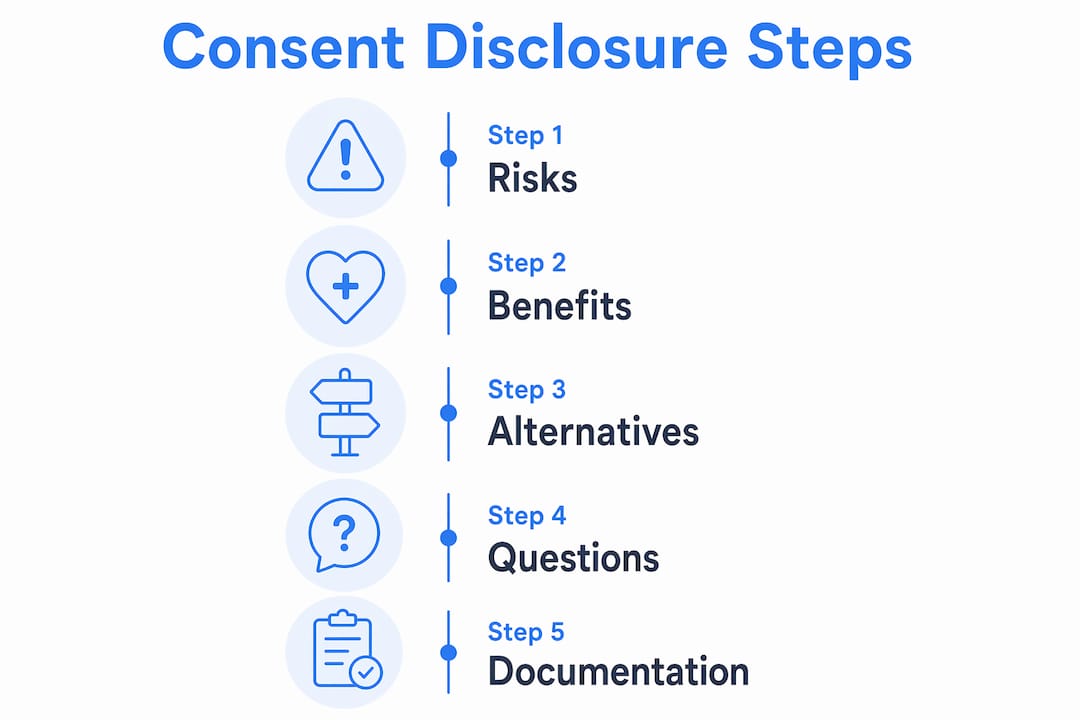
The core elements of a complete natural therapies informed consent process include:
- Nature of the therapy. The practitioner must explain what the treatment involves, how it works, and what it is designed to support.
- Realistic benefits. Claims must be honest and grounded. Consent forms for natural therapies must clarify that therapies are complementary and supportive, not cures, and must avoid unverified disease-specific claims.
- Known risks and side effects. Every therapy carries some risk. Bee venom therapy, for example, carries allergy risk. Herbal supplements can interact with prescription drugs. These must be named, not buried.
- Available alternatives. You must be told what other options exist, including conventional medical care.
- Patient responsibilities. Practitioners need to know every supplement and medication you currently take, because interactions with natural therapies can cause real harm.
- Right to withdraw. You can change your mind at any time. Standard consent documents confirm this right explicitly, and no practitioner can legally pressure you to continue.
- Limitations of the therapy. Natural therapies are not substitutes for emergency care or medical diagnosis. This must be stated clearly.
Pro Tip: Before your first appointment, write down every supplement, herb, and prescription drug you take. Bring that list to your practitioner. This single step protects you from the most common and preventable adverse interactions in natural therapy.
How does natural therapy consent compare to conventional medical consent?
The ethical foundation is identical. Both conventional medicine and natural therapies operate under the same four bioethical principles: autonomy, beneficence, non-maleficence, and justice. Where they differ is in the degree of scientific validation behind the treatments and the historical consistency of documentation requirements.
| Consent element | Natural therapies | Conventional medicine |
|---|---|---|
| Ethical framework | Autonomy, beneficence, non-maleficence, justice | Autonomy, beneficence, non-maleficence, justice |
| Scientific validation | Often limited or emerging | FDA-approved, peer-reviewed |
| Legal documentation | Increasingly mandatory (Texas 2025, India 2026) | Long-established legal requirement |
| Cure claims | Prohibited without evidence | Regulated by FDA and FTC |
| Ongoing consent | Required as treatment evolves | Standard clinical practice |
| Patient disclosure duties | Supplements, herbs, medications | Medications, allergies, medical history |
The biggest misconception patients carry into natural therapy is that a “natural” label means “safe without discussion.” That thinking is dangerous. Failure to disclose risks and alternatives is a leading cause of malpractice lawsuits in both conventional and complementary medicine. The legal exposure for a natural therapy practitioner who skips proper consent is real and growing.
One meaningful difference is the cultural dimension. Consent in traditional and indigenous healing systems must account for language barriers and cultural context to be valid. A consent form written in clinical English handed to a patient who speaks another language is not meaningful consent. Ethical practitioners adapt their communication to meet you where you are.
Another difference worth knowing: natural therapies often lack FDA approval, which means the burden of honest, detailed disclosure falls even more heavily on the practitioner. You cannot rely on a regulatory body to have pre-vetted the therapy. Your informed consent conversation is your primary protection.
Why is informed consent especially critical in natural therapies?
The stakes are high, and the risks are real. Many people pursuing natural therapies are already dealing with complex, chronic conditions like Morgellons Disease or Lyme disease. They have often been failed by conventional medicine and are vulnerable to promises that sound too good. That vulnerability makes rigorous consent not just a legal formality but a genuine act of care.
Here is why this matters so much in the natural therapy space:
- Malpractice risk is rising. Comprehensive disclosure and documentation are now the standard expected by courts and licensing boards. Practitioners who skip this step face serious legal consequences.
- Drug and supplement interactions are underreported. Many patients combine prescription medications with herbal supplements or apitherapy products without telling anyone. The interaction risk is real and can be severe.
- Expectation management saves relationships. When you know upfront that a therapy supports healing rather than guarantees a cure, you can set realistic goals. Disappointment and distrust follow when that conversation never happens.
- Cultural and language barriers affect consent validity. Consent must be adapted to cultural nuances and language differences to be meaningful. A practitioner who does not account for this is not meeting the ethical standard.
- Documentation protects you too. Written records of what was disclosed, what you agreed to, and when you signed give you recourse if something goes wrong.
Proper documentation and transparency reduce malpractice risks and enhance patient safety in complementary medicine. That is not just good ethics. It is good self-protection for everyone in the room.
Pro Tip: Informed consent is not a one-time event. If your treatment plan changes, your condition shifts, or a new therapy is added, ask your practitioner to revisit and update your consent. Changing conditions require re-consent to stay both ethical and legal.
What steps can patients take to protect themselves?
You are not a passive participant in this process. Informed consent is a two-way exchange, and you have real power in it. Here is how to use it.
-
Ask specific questions before you agree to anything. Ask: What are the known risks of this therapy? What are the realistic benefits? What happens if I choose not to do this? What alternatives exist? A practitioner who cannot or will not answer these questions clearly is a red flag.
-
Request written documentation and read it carefully. Do not accept verbal-only explanations. Written consent forms protect you. Read every clause, including the ones about what the therapy cannot do.
-
Disclose everything you are taking. List every prescription drug, over-the-counter medication, herbal supplement, and vitamin. This is not optional. Interactions between natural therapies and conventional medications are a genuine safety concern. You can learn more about communicating with doctors about your full treatment picture.
-
Know that your consent is voluntary and reversible. You can withdraw at any time without penalty. No ethical practitioner will pressure you to continue a therapy you no longer want.
-
Seek a second opinion if something feels wrong. If a practitioner makes cure claims, dismisses your questions, or refuses to provide written documentation, get another opinion. Understanding why alternative therapy research matters to caregivers can help you ask better questions.
-
Keep copies of everything. Store your signed consent forms, treatment records, and any written communications. If your treatment plan evolves, ask for updated documentation.
-
Understand the limits of what you are agreeing to. Natural therapies support your body. They are not replacements for emergency care or medical diagnosis. Knowing this upfront keeps you safe.
Key Takeaways
Informed consent in natural therapies is a legal, ethical, and practical requirement that protects patients and practitioners equally, and it must be treated as an ongoing process, not a one-time signature.
| Point | Details |
|---|---|
| Consent is a process, not a form | Informed consent requires ongoing communication, not just a signature at the first appointment. |
| Disclosure has legal teeth | Texas and India now mandate formal CAM consent documentation, with more jurisdictions expected to follow. |
| Patient duties matter | Disclosing all medications and supplements to your practitioner is your responsibility and your safety net. |
| Natural therapies are complementary | Consent forms must state that these therapies support, not replace, conventional medical care. |
| Withdrawal rights are absolute | You can withdraw consent at any time, and no ethical practitioner will penalize you for it. |
Why I believe informed consent is the most underrated act of care
I have watched people in real pain, people dealing with Morgellons, Lyme, and conditions that conventional medicine barely acknowledges, walk into natural therapy situations completely unprepared. They are desperate for relief, and that desperation makes them skip the hard questions. I understand that feeling in my bones.
But here is what I have come to believe: the consent conversation is not a bureaucratic hurdle. It is the moment a practitioner shows you whether they actually respect you. When someone sits down and tells you honestly what a therapy can and cannot do, what the risks are, and that you can walk away at any time, that is care. That is the foundation everything else is built on.
The natural therapy world is changing fast. Regulatory standards are rising. Texas and India are not outliers. They are the beginning of a global shift toward accountability in complementary medicine. I think that is a good thing, even when it adds paperwork. Transparency is not the enemy of natural healing. It is what makes natural healing trustworthy.
What I want for you is simple: go into every treatment with your eyes open. Ask the uncomfortable questions. Demand written documentation. And if a practitioner makes you feel like those requests are unreasonable, find someone else. You deserve better than that.
— Megan
How Megansmiraclestudio supports your right to informed decisions
At Megansmiraclestudio, transparency is not an afterthought. Every product we offer, from apitherapy bee venom kits to our supplements and internal detox range, comes with detailed usage instructions, safety information, and honest guidance about what each therapy is designed to support. We do not make cure claims. We give you real information so you can make real decisions.
If you are new to natural therapies and want to understand what you are getting into before you commit, our educational resources are free and built for people exactly like you. We know what it feels like to search for answers when conventional medicine has run out of them. That is why we built this platform the way we did: with honesty at the center of everything.
FAQ
What is informed consent in natural therapies?
Informed consent in natural therapies is the process where a practitioner discloses the nature, risks, benefits, and alternatives of a treatment before you agree to it. It is a legal and ethical requirement, not just a formality.
Are natural therapy practitioners legally required to get consent?
Yes. Jurisdictions including Texas (since january 2025) and India (since june 2026) now mandate written, documented consent for complementary and alternative medicine therapies. More regions are expected to follow.
Can I withdraw consent from a natural therapy treatment?
You can withdraw consent at any time, for any reason, without penalty. Standard consent documents confirm this right explicitly, and no ethical practitioner can pressure you to continue.
What should I disclose to my natural therapy practitioner?
Disclose every prescription drug, supplement, herb, and over-the-counter medication you take. Interaction risks between natural therapies and other substances are real, and your practitioner needs this information to keep you safe.
How is natural therapy consent different from conventional medical consent?
The ethical principles are identical, but natural therapies often lack FDA approval, which places a greater burden on the practitioner to disclose limitations honestly. Documentation requirements are also newer in the natural therapy space but are rapidly gaining legal parity with conventional medicine standards.