
Alternative therapy research is the evidence base caregivers need to identify which complementary treatments are safe, effective, and worth pursuing alongside conventional care. If you’re managing a loved one’s chronic illness, whether that’s Morgellons Disease, Lyme disease, cancer, or dementia, you already know the weight of every decision you make. The wrong choice costs time, money, and sometimes health. The right research changes everything. The WHO’s TCIM Strategy 2025–2034 defines integrative medicine as interdisciplinary and evidence-based, combining biomedicine with traditional and complementary practices. That framework exists precisely because caregivers and patients deserve more than guesswork.
Why alternative therapy research matters to caregivers
Alternative therapy research matters to caregivers because it separates what genuinely helps from what only sounds promising. Without it, you’re navigating a space full of conflicting claims, expensive products, and real safety risks. The importance of alternative therapy research is not abstract. It shows up in the specific decisions you face every week: whether to add a supplement, try acupuncture, or explore mind-body practices alongside a loved one’s treatment plan.
The field these studies belong to is formally called integrative medicine or complementary and integrative health (CIH). You’ll hear “alternative therapy” used casually, but the research community uses these terms to signal that the treatments are studied as additions to, not replacements for, standard care. Knowing that distinction protects you from the most dangerous mistake caregivers make: abandoning proven treatments in favor of unproven ones.
Credible sources like the Mayo Clinic, BMJ Open, and Frontiers in Public Health now publish caregiver-relevant findings regularly. That means you have real data to work with, not just testimonials.
How common is complementary therapy use among patients and caregivers?
The numbers are striking. The 2026 COSMOS trial found that 58.8% of older adults used at least one complementary health approach in the past year. That is not a fringe behavior. It is the majority. Yet many of those same people never told their healthcare providers. That communication gap is where real harm can happen, and it is where caregivers play a critical role.
Common complementary approaches used by patients and caregivers include:
- Dietary supplements such as vitamins, minerals, and herbal products
- Mind-body practices including yoga, meditation, and guided imagery
- Manual therapies such as massage and chiropractic care
- Acupuncture and other traditional medicine modalities
- Functional foods and phytotherapy like medicinal mushrooms and plant-based compounds
Each of these categories has a different evidence profile. Yoga, for example, showed statistically significant distress reduction in a 2026 randomized caregiver trial, with the yoga group reporting less distress compared to an education and support control group (P=.01). That kind of specific, measurable result is what research gives you that no product label ever will.
The communication gap matters to you directly. If your loved one is using supplements or other therapies and their doctor doesn’t know, interactions and contraindications go undetected. Understanding how to talk with doctors about these therapies is one of the most protective things you can do.
Why caregivers need research focused on their own well-being
Most therapy research focuses on patient outcomes. That is a problem, because caregivers suffer too. The physical exhaustion, the anxiety, the grief of watching someone you love struggle with a chronic illness. These are real clinical burdens, and they deserve real clinical attention.
Research protocols like the 2026 BMJ Open ACT study are changing that. This protocol for Acceptance and Commitment Therapy targets family caregivers of people with dementia specifically, measuring caregiver depression, anxiety, burden, and health-related quality of life as primary endpoints. Not patient symptoms. Caregiver outcomes. That shift in focus is significant.
“The caregiver role is increasingly recognized in alternative therapy research, with mental health and caregiver burden outcomes gaining measurement focus.” — BMJ Open ACT Protocol, 2026
Research on Namaste Care, a sensory-based complementary program for people with advanced dementia, found reduced caregiver stress and less antidepressant use among caregivers involved in the program. The effects were moderate, not miraculous, but they were measurable and meaningful. That is what good research tells you: the realistic size of a benefit, not just whether one exists.
Pro Tip: Track your own emotional well-being alongside your loved one’s symptoms. Studies with caregiver-specific endpoints show that your mental health is a legitimate therapy outcome, not a side note.
The benefits of alternative treatments for caregivers extend beyond stress relief. Therapies that reduce your anxiety and burnout also make you a more effective, present caregiver. Research that measures those outcomes gives you permission to prioritize your own wellness as part of the care plan.
What challenges exist in evaluating alternative therapies?
The honest answer is that many integrative practices appear to lack strong evidence not because they don’t work, but because conventional research designs were never built to evaluate them. A randomized controlled trial designed for a single pharmaceutical drug does not translate cleanly to a multi-component therapy like acupuncture combined with dietary changes and stress management. The evidence gap is a design mismatch, not necessarily a proof of ineffectiveness.
Here is how to interpret research quality when you’re evaluating a therapy:
- Check the study design. Pragmatic trials and mixed-methods studies reflect real-world use better than tightly controlled lab settings.
- Look at the specific therapy, dose, and delivery. “Yoga” in one study may be 60-minute sessions three times a week. Another study may use 20-minute sessions once a week. The results are not interchangeable.
- Identify who was studied. A trial on cancer patients does not automatically apply to someone with Lyme disease or Morgellons.
- Check what outcomes were measured. If a study only measured tumor markers and you care about caregiver stress, that study does not answer your question.
| Research type | Best used for | Limitation for caregivers |
|---|---|---|
| Randomized controlled trial | Proving a specific effect | Often excludes caregiver outcomes |
| Pragmatic trial | Real-world effectiveness | Less control over variables |
| Mixed-methods study | Understanding experience and outcomes | Less statistical precision |
| Systematic review | Summarizing multiple studies | Quality depends on included studies |
Pro Tip: When reading a study, go straight to the “participants” and “outcomes” sections first. If neither matches your situation, the findings may not apply to your care context.
Understanding these limitations does not mean dismissing research. It means reading it with the right questions. Caregivers who understand holistic chronic disease strategies are better equipped to evaluate which findings actually apply to their situation.
How does economic evidence from therapy research benefit caregivers?
Cost is not a minor concern for caregivers. It is often the deciding factor. When research demonstrates that a therapy is cost-effective, it creates pressure on insurers and health systems to cover it, which directly reduces your out-of-pocket burden.
A 2026 Frontiers systematic review analyzed 10 studies on integrative oncology and found that phytotherapeutic and mind-body interventions frequently fell within national willingness-to-pay thresholds, meaning health economists considered them worth funding. That finding has real-world implications for what gets reimbursed.
| Therapy category | Economic profile | Caregiver access implication |
|---|---|---|
| Phytotherapy | Often cost-effective | Growing reimbursement potential |
| Mind-body practices | Favorable in oncology | Increasingly covered by some insurers |
| Acupuncture | Variable by condition | Coverage expanding in some health systems |
As a caregiver, you can act on this data directly:
- Ask your loved one’s care team whether any complementary therapies are covered under their current plan.
- Request a referral to an integrative medicine department, which often has access to subsidized programs.
- Look for hospital-based integrative oncology programs, which frequently offer yoga, acupuncture, and nutritional counseling at low or no cost.
- Inquire about clinical trials that provide free access to therapies being studied.
Cost-effectiveness findings are not just academic. They are the mechanism by which research translates into access. When you understand that mechanism, you can advocate for coverage more effectively.
What practical steps can caregivers take with therapy research?
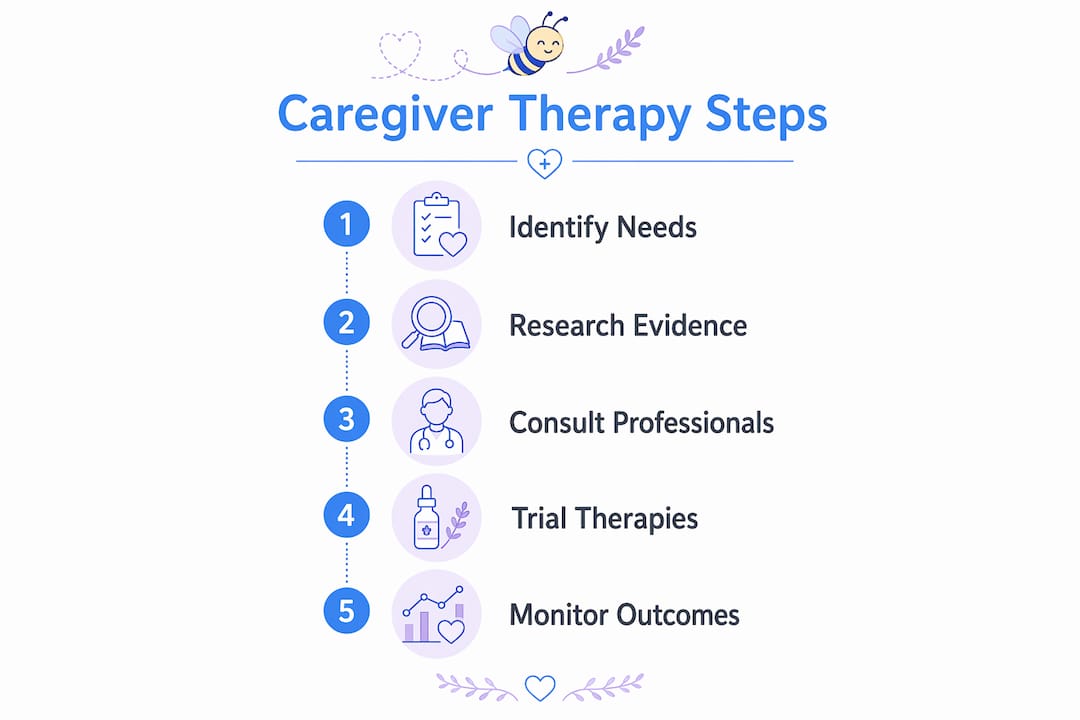
Knowing research exists is not enough. You need a way to use it in real conversations with real clinicians. Here is a process that works:
- Build an evidence-backed disclosure pack. Document every complementary therapy your loved one uses: the name, dose, frequency, source, and any effects you’ve observed. The COSMOS trial specifically recommends this kind of structured disclosure to close the communication gap between patients and providers.
- Bring research to appointments. Print or save the abstract of a relevant study and ask your provider to review it with you. This shifts the conversation from anecdote to evidence.
- Use Mayo Clinic guidance as a baseline. The Mayo Clinic frames integrative treatments as adjuncts to standard care, targeting symptoms like sleep disruption, nausea, and stress. That framing helps you position complementary therapies accurately with skeptical providers.
- Track outcomes over time. Use a symptom and therapy log to document what changes after starting a new approach. Good symptom documentation gives you real data to discuss, not just impressions.
- Monitor for interactions. Some supplements interact with medications. Research helps you identify those risks before they become problems.
Pro Tip: Nutrition is often the most overlooked complementary strategy in chronic illness care. Understanding nutrition’s role in caregiver support can give you a practical starting point that most clinicians will support.
Key takeaways
Alternative therapy research gives caregivers the evidence to choose safe, effective complementary treatments that protect both patient health and caregiver well-being.
| Point | Details |
|---|---|
| Research defines safe adjuncts | WHO’s TCIM framework confirms integrative therapies must be evidence-based additions to standard care, not replacements. |
| Prevalence demands awareness | 58.8% of older adults use complementary therapies, yet most don’t disclose this to providers, creating a risk caregivers must address. |
| Caregiver outcomes are measurable | Studies like the ACT protocol and Namaste Care research show real reductions in caregiver stress, anxiety, and burden. |
| Study design shapes relevance | Caregivers must match research design, population, and outcomes to their specific situation before applying findings. |
| Economic evidence expands access | Cost-effectiveness data on phytotherapy and mind-body practices is driving reimbursement decisions that reduce caregiver costs. |
Why I believe caregiver-focused research changes everything
I’ve watched so many caregivers walk into this world terrified and overwhelmed. They’re doing everything right for their loved one and falling apart themselves. And when they ask about alternative therapies, they get one of two responses: dismissal or uncritical enthusiasm. Neither one helps.
What I’ve seen change people’s experience is not a single therapy. It’s the moment they stop asking “is this natural?” and start asking “what does the research actually show for someone in my situation?” That shift is everything. It moves you from passive consumer to informed advocate.
The misconception I see most often is that “no strong evidence” means “doesn’t work.” It often means the research hasn’t caught up yet, or the study design wasn’t right for the therapy. Understanding that distinction, as the integrative research community has been arguing for years, protects you from both dismissing something genuinely helpful and embracing something genuinely risky.
What I want for every caregiver reading this is simple. I want you to feel equipped. Not overwhelmed by research jargon, but genuinely capable of reading a study, asking a smart question, and making a decision you can stand behind. You deserve that. Your loved one deserves that.
— Megan
How Megansmiraclestudio supports caregivers exploring alternative therapies
At Megansmiraclestudio, we built this platform because we know what it feels like to search desperately for something that actually helps. Our supplements and internal detox collection is designed specifically for people managing complex chronic conditions like Morgellons Disease and Lyme disease, with products that complement, not replace, your care plan. We also offer educational resources, including guides on apitherapy and bee venom therapy protocols, so you can make informed choices grounded in real information. If you’re a caregiver looking for evidence-aligned natural support options, start there. You don’t have to figure this out alone.
FAQ
What is alternative therapy research in the context of caregiving?
Alternative therapy research examines the safety, effectiveness, and outcomes of complementary treatments used alongside conventional medicine. For caregivers, it provides evidence to guide decisions about therapies like yoga, supplements, and acupuncture for both patients and themselves.
How does therapy research specifically help caregiver mental health?
A 2026 randomized trial found yoga significantly reduced distress in caregivers compared to education and support alone (P=.01). Research protocols like the BMJ Open ACT study now measure caregiver depression, anxiety, and burden as primary outcomes, not afterthoughts.
Why do so many alternative therapies seem to lack strong evidence?
The evidence gap is often a mismatch between conventional study designs and the complexity of integrative care, not proof that therapies are ineffective. Pragmatic and mixed-methods research is closing that gap by better reflecting real-world use.
Can alternative therapy research reduce costs for caregivers?
A 2026 Frontiers systematic review found phytotherapeutic and mind-body interventions frequently met national cost-effectiveness thresholds. That data influences insurer reimbursement decisions, which can directly reduce out-of-pocket costs for caregivers.
How should caregivers discuss alternative therapies with doctors?
Build a structured disclosure pack listing every therapy, dose, and observed effect, then bring relevant research abstracts to appointments. The COSMOS trial recommends this approach specifically to close the communication gap between patients, caregivers, and providers.