
Documenting patient symptoms in caregiver records is the process of systematically capturing health changes, care activities, and observable behaviors to improve communication with medical providers and support better treatment decisions. For anyone managing Morgellons Disease, Lyme disease, or another complex chronic condition, this practice is not optional. It is the difference between a doctor who understands what is happening between appointments and one who is working blind. Structured symptom documentation, sometimes called a caregiver observation log or patient health record, gives your care team the longitudinal picture that a single clinic visit can never provide. Tools like Brello Health and simple paper-based templates both serve this purpose well.
What essential information should caregivers record when documenting symptoms?
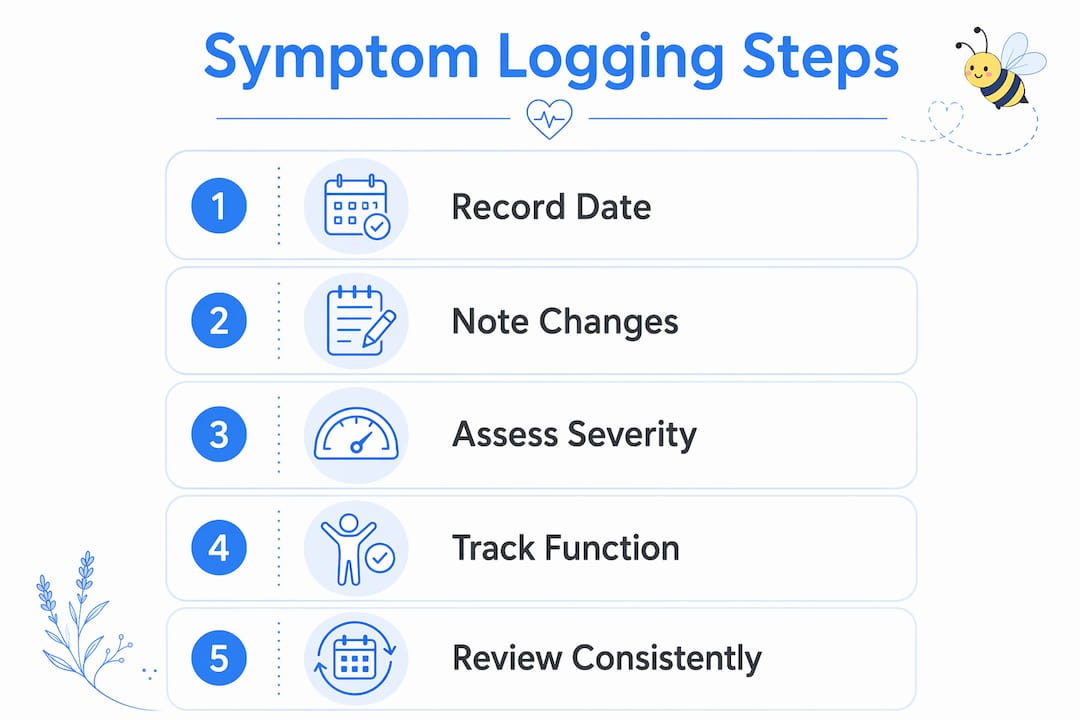
The most clinically useful caregiver records follow a structured format that captures date and time, observable changes, severity or concern level, and a specified follow-up action. That structure is not bureaucratic overhead. It is what separates a note a doctor can act on from one they set aside.
A caregiver observation log should capture specific dated changes across domains like breathing, mobility, mood, memory, sleep, and appetite. Start with three core fields and expand as your routine stabilizes. Trying to track everything on day one is how people quit by day three.
Here is what a thorough daily entry covers:
- Date, time, and your name as the observer, so records are traceable when multiple caregivers are involved
- What changed: describe the specific symptom or behavior shift, not a label like “bad day”
- Severity or concern level: a simple 1 to 5 scale works; consistency matters more than precision
- Context: what was the patient doing before the symptom appeared? Did it follow a meal, a medication dose, physical activity, or a stressful event?
- Functional impact: note whether the patient needed help with showering, dressing, or moving. Functional impact details and care time estimates are more actionable than symptom labels alone. For example, “showering assistance required 25 minutes” tells a care coordinator far more than “fatigue noted.”
- Actions taken: did you call a clinician, encourage rest, administer a supplement, or file an incident report?
- Follow-up needed: flag whether the issue needs attention at the next appointment or sooner
Keep symptom notes separate from timesheets or service records. Mixing them creates confusion for billing, legal review, and clinical use.
Pro Tip: Set a fixed time each day, such as right after the patient’s evening meal, to write your notes. Consistent timing reduces the chance of forgetting details and makes patterns easier to spot across weeks.
Which tools and templates work best for organizing caregiver records?
The right tool is the one you will actually use every single day. That sounds obvious, but caregivers managing someone with a chronic illness are already exhausted. A complex system that demands 20 minutes of data entry will collapse within a week.
Here is how the main options compare:
| Tool type | Best for | Limitation |
|---|---|---|
| Paper log or binder | Low-tech caregivers, no internet access | Hard to search, easy to lose |
| Spreadsheet (Google Sheets, Excel) | Caregivers comfortable with basic software | Requires manual formatting, no alerts |
| Digital symptom app (Brello Health) | Multi-caregiver teams, provider sharing | Requires device and internet access |
| PDF template (Medicaid care log) | Paid family caregivers needing formal records | Static format, no trend analysis |
Digital symptom logs use a simple workflow to create symptom entries with notes, forming a personal record useful for review with healthcare providers. The real advantage of a digital app is longitudinal trend visibility. You can see that a patient’s pain spikes every Thursday, which might correlate with a specific therapy session or medication schedule. Paper logs rarely reveal that kind of pattern without significant effort.
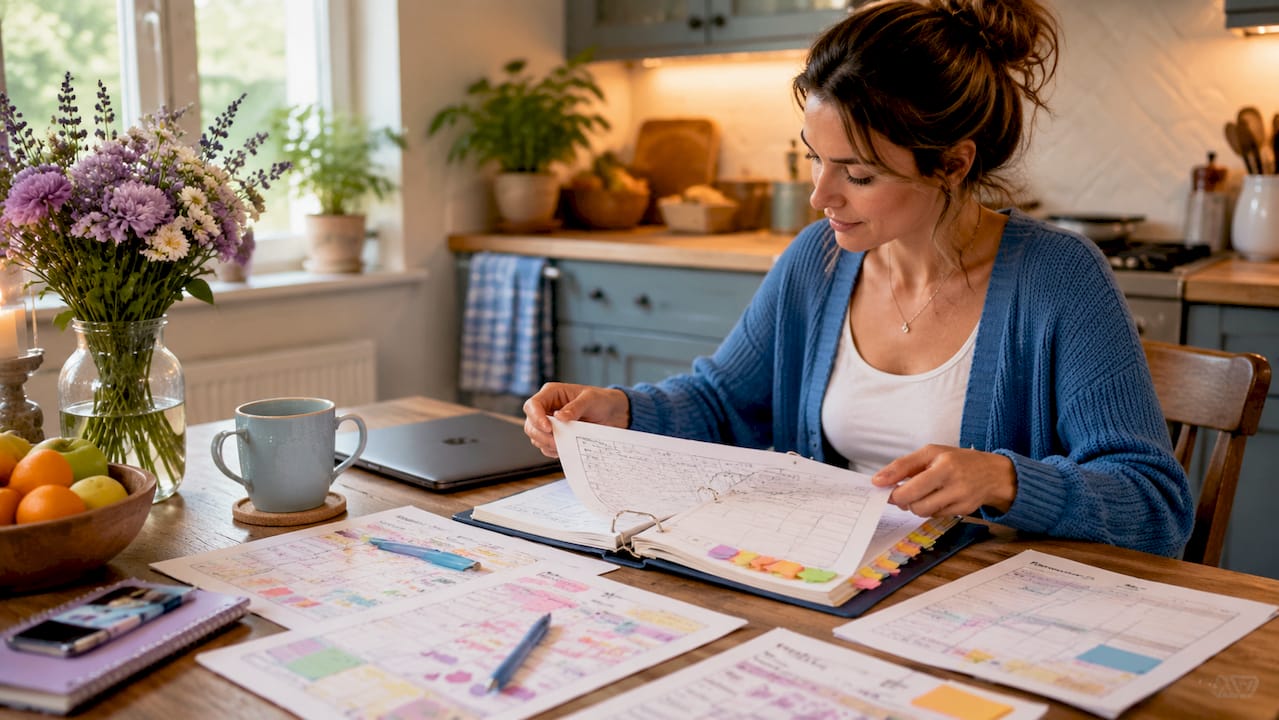
For paper-based systems, organize records in a three-ring binder with monthly dividers. Use one section for daily symptom notes, one for medication logs, and one for provider correspondence. Label everything with the patient’s name and date range on the spine.
For digital files, store PDFs in a clearly named folder structure: Year, then Month, then document type. Back up to a secure cloud service like Google Drive or iCloud with two-factor authentication enabled.
Pro Tip: If multiple caregivers share responsibility, use a shared Google Sheet or a HIPAA-aware app so everyone sees the same record in real time. Fragmented notes across three different notebooks are worse than no notes at all.
How do you document symptoms so they are actually useful to clinicians?
Objective, clear, and concise documentation focusing on relevant clinical information improves communication and reduces ambiguity for clinicians. The single biggest mistake caregivers make is writing interpretations instead of observations. “She seemed depressed” is an interpretation. “She declined to eat breakfast, did not speak during the morning routine, and cried twice without an identifiable trigger” is an observation. Clinicians need the second version.
Follow these principles for every entry:
- Describe what you saw, heard, or measured. “Skin lesion on left forearm, approximately 2 centimeters, red border, present since Tuesday” beats “skin looks bad again.”
- Include frequency, severity, and duration. A symptom log for VA disability claims serves as lay evidence documenting frequency, severity, and duration, filling gaps between clinical visits. The same logic applies to any chronic illness record.
- Note what makes it better or worse. Did the rash improve after applying a topical treatment? Did fatigue worsen after a poor night’s sleep?
- Avoid stigmatizing language. Words like “manipulative,” “non-compliant,” or “dramatic” do not belong in a health record. Patient-centered language reduces stigma and supports trust in medical documentation.
“Structured notes reduce ambiguity and assist healthcare providers in understanding patient needs.” This is especially true for conditions like Morgellons Disease, where symptoms are complex, often dismissed, and desperately need clear, credible documentation to be taken seriously.
Bring printed copies of your symptom log to every appointment. Do not assume the provider has time to read a digital file during a 15-minute visit. A one-page summary of the past month’s key changes is far more likely to influence the conversation.
How can caregivers protect patient privacy while managing records?
Patient privacy in caregiver documentation is governed by a real legal framework, not just common sense. The 21st Century Cures Act requires healthcare providers to offer patients immediate electronic access to their health records, with limited exceptions for potential harm scenarios. That means anything a provider writes in an official record, your patient may read.
Here is how to manage privacy without compromising the usefulness of your records:
- Understand what goes where. Your personal caregiver notes are separate from the official medical record. You control your own logs. What you share with a provider may become part of the clinical record.
- Ask before sharing sensitive observations. If you have concerns about a patient’s mental health, substance use, or behavior that could cause harm if disclosed, discuss with the provider how that information will be documented. Collateral information from caregivers may be excluded from patient access to avoid serious harm or stigma.
- Store records securely. Paper records belong in a locked cabinet. Digital files belong in password-protected, encrypted storage. Do not email symptom logs through unsecured channels.
- Clarify consent upfront. Patient record access does not always include collateral caregiver notes, and clarifying documentation roles and consent upfront benefits all parties. Have a direct conversation with the patient about what you are recording and why.
- Limit distribution. Share records only with providers directly involved in care. A specialist who treated the patient two years ago does not need your current daily log.
Pro Tip: Write your personal caregiver notes as if the patient might read them someday. That discipline keeps your language respectful, factual, and defensible, regardless of whether the notes ever become part of a formal record.
Key takeaways
Consistent, structured caregiver records built around observable facts and functional impact give clinicians the information they need to make better decisions for patients with chronic illness.
| Point | Details |
|---|---|
| Start with three core fields | Record date, what changed, and concern level before adding more detail. |
| Prioritize functional impact | Note care time and task-specific help needed, not just symptom labels. |
| Use objective language | Describe observations, not interpretations, to improve clinical usefulness. |
| Separate personal notes from official records | Your caregiver log and the medical record are different documents with different access rules. |
| Protect privacy proactively | Store records securely and discuss consent with patients before sharing sensitive observations. |
Why I think most caregivers are documenting the wrong things
I have watched so many caregivers, including people I care about deeply, pour their hearts into keeping records and still walk out of appointments feeling unheard. The notes were there. The effort was real. But the entries said things like “rough night” or “not feeling well.” That kind of documentation does not move the needle.
What actually changed things for the people I have worked with was shifting from emotional summaries to functional specifics. Not “she struggled today” but “she needed 30 minutes of assistance to shower and could not lift her arms above shoulder height.” That one change made providers sit up and pay attention.
For anyone managing Morgellons, Lyme, or a similarly misunderstood condition, your records are also your credibility. Doctors who are skeptical of your diagnosis will look for reasons to dismiss your concerns. A detailed, dated, objective log is harder to dismiss than a verbal summary. It is evidence. Treat it that way.
I also want to say this plainly: you do not need a fancy app to do this well. A notebook and a consistent daily habit will outperform a sophisticated digital system you abandon after two weeks. Start simple. Build the habit. Then add tools as your needs grow. If you are following a structured recovery protocol, integrating your symptom log with your pre-protocol preparations gives you a baseline that makes every subsequent observation more meaningful.
— Megan
How Megansmiraclestudio supports your health tracking journey
At Megansmiraclestudio, we know that tracking symptoms is only part of the picture. You also need support for what those symptoms are doing to your body every single day. That is why we developed products specifically for people fighting chronic conditions like Morgellons and Lyme, where inflammation, immune disruption, and systemic stress are constant battles.
Our Snow Mushroom Polysaccharide Capsules are designed to support immune function and reduce systemic inflammation, two factors that directly affect the severity and frequency of the symptoms you are working so hard to document. Pair your daily symptom log with a consistent supplement protocol and you give your care team something powerful: a record of what changes when you support your body differently. Visit Megan’s Miracle to explore the full range of products built for people who refuse to stop fighting.
FAQ
What is a caregiver symptom log?
A caregiver symptom log is a structured daily record that captures observable health changes, severity levels, functional impact, and follow-up actions for a patient under care. It serves as a communication tool between caregivers and healthcare providers.
How often should caregivers update patient records?
Daily entries are the standard for active symptom tracking, particularly for chronic illness management. Consistent timing, such as the same time each evening, improves accuracy and makes patterns easier to identify over weeks and months.
Can patients access caregiver notes in their medical records?
Not automatically. Personal caregiver logs are separate from the official medical record. However, information shared with a provider may be incorporated into clinical documentation, which patients can access under the 21st Century Cures Act.
What details make a symptom log most useful for doctors?
Clinically useful notes include specific dates, observable changes across domains like mobility and mood, a severity rating, and a clear follow-up action. Functional details, such as how long a care task took, add significant value beyond symptom labels alone.
Should caregivers use paper or digital tools for symptom tracking?
Both work, and the best choice depends on your comfort level and care situation. Digital apps like Brello Health offer trend analysis and multi-caregiver sharing, while paper binders are reliable for caregivers without consistent device access. The tool you use consistently beats the tool you abandon.