

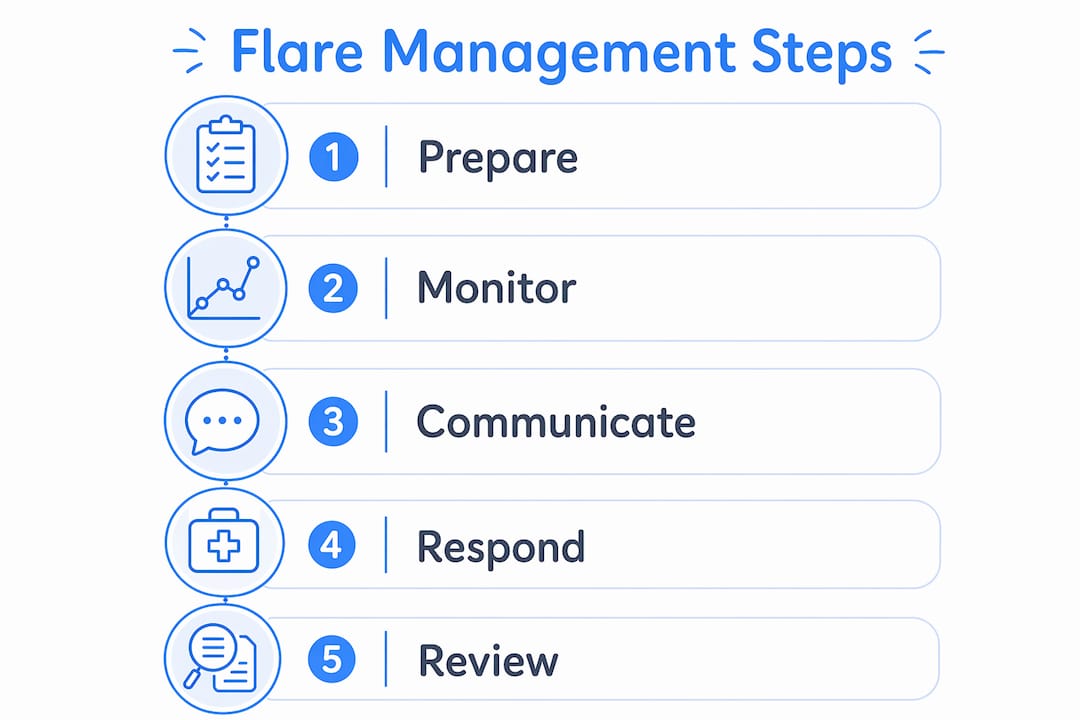
Chronic illness flare management for caregivers is a systematic approach built on preparation, monitoring, and clear communication to minimize flare impact and keep patients stable. When a flare hits, whether from Lyme disease, Morgellons, lupus, or another complex condition, the difference between a manageable episode and a crisis often comes down to what you set up before symptoms escalate. The CDC’s chronic disease self-management framework, CDSME workshops, and care coordination tools give caregivers a real structure to work from. This guide breaks down exactly what that structure looks like in practice.
What does chronic illness flare management mean for caregivers?
Flare management is the set of routines and decisions a caregiver uses to reduce harm when a chronic condition worsens suddenly. The term “flare” refers to a temporary but significant increase in symptoms, and managing it well requires preparation long before the bad days arrive. CDC chronic condition guidance defines the core tasks as eating well, staying active, following the treatment plan, taking medicines as prescribed, monitoring health at home, and calling the healthcare team for new or worsening symptoms, even at night. That last point matters more than most caregivers realize. Waiting until morning to report a concerning change can turn a manageable flare into an emergency.
Caregiver tasks that seem routine, like tracking medication timing and watching for symptom shifts, are actually high-leverage activities that stop flares from escalating. The caregiver who notices a two-day pattern of increased pain or fatigue and calls the nurse navigator early is doing something clinically significant. That is flare management in its truest form.

What are the essential components of an effective flare management plan?
A written plan is the foundation of every effective flare response. When a flare hits, cognitive fog and stress make memory unreliable. A one-page care plan that lists diagnoses, medications with doses and timing, allergies, treatment goals, and emergency contacts removes the guesswork entirely. You bring it to every clinical visit, and you update it whenever anything changes.
Here is what a complete flare management plan should include:
- Diagnosis list: Every confirmed condition, written clearly with the date of diagnosis
- Medication schedule: Drug name, dose, timing, and what it treats, not just a list of pill names
- Allergy and reaction history: Including past medication reactions that caused problems
- Symptom thresholds: Specific signs that mean “call the doctor now” versus “monitor for 24 hours”
- Emergency contacts: Primary care provider, specialist, nurse navigator, and a backup family contact
- Care kit checklist: Heating pad, electrolyte drinks, comfort items, and any prescribed rescue medications
A shared medication list with dose and timing reduces errors and supports consistency across visits and flare episodes. Pill organizers and phone-based medication reminders like those built into Apple Health or Google Health Connect add a second layer of protection. Keeping this plan in a physical binder and a digital file means it is accessible even when you are exhausted and running on fumes.
Pro Tip: Laminate a one-page version of the care plan and tape it inside a kitchen cabinet. During a bad flare, you will not have to search for it.
You can find practical guidance on organizing treatment records at home to keep your plan current and accessible.
How can caregivers coordinate effectively with healthcare teams during flare-ups?
Care coordination is the single most underused tool caregivers have. Family caregivers often serve as patient navigators, managing appointments, insurance, and medication schedules, yet they are frequently left out of direct communication with the care team. That gap causes errors. Requesting to be explicitly included in care decisions and communication loops is not overstepping. It is a clinical safety measure.
Follow these steps to build a real coordination system with the healthcare team:
- Identify every team member by name. Know the primary care provider, each specialist, the nurse navigator, and any social worker involved in care. Write their direct contact numbers in the care plan.
- Request caregiver inclusion in writing. Ask the provider to document in the patient’s chart that you are an authorized care contact. This protects communication rights during hospitalizations.
- Set pre-agreed escalation thresholds. Work with the care team to define exactly which symptoms require a same-day call, which warrant an ER visit, and which can be monitored at home. Pre-agreed escalation thresholds improve the timeliness and appropriateness of care interventions.
- Coordinate across providers. When a patient sees multiple specialists, coordinated care across providers with aligned medication timing reduces confusion and risk during flares. Ask each provider to send notes to a central primary care physician.
- Attend appointments prepared. Bring the one-page care plan, a written list of current symptoms, and any home monitoring data like blood pressure logs or glucose readings.
Burden reduction and risk control improve significantly when caregivers are explicitly included in day-to-day care coordination. That is not an opinion. It is a pattern seen consistently across chronic disease management research.
What self-management education should caregivers and patients develop together?
Chronic Disease Self-Management Education, known as CDSME, is the most evidence-backed skill-building resource available to caregivers and patients. CDSME workshops run about 2 hours per week for 6–8 weeks, offering peer support and practical skills for symptom management. The format is structured but not clinical. It teaches problem-solving, communication with providers, and how to build flare day routines that actually hold up under pressure.
The clinical results from structured self-management education are real. In diabetes care, for example, diabetes self-management education reduces mean HbA1c by 0.35% compared to standard care alone. That is a measurable improvement from education, not medication changes. The same principle applies across chronic conditions: structured learning changes outcomes.
| Education element | Caregiver benefit |
|---|---|
| Symptom tracking practice | Builds confidence in recognizing early flare signs |
| Peer support groups | Reduces isolation and provides real-world coping strategies |
| Medication management skills | Reduces dosing errors during high-stress flare episodes |
| Communication coaching | Improves clarity when speaking with healthcare providers |
| Flare routine rehearsal | Embeds responses so they work automatically on bad days |
Repeated rehearsal of flare routines during self-management education programs helps embed skills that caregivers and patients rely on when symptoms actually occur. Think of it like a fire drill. You practice when things are calm so the response is automatic when they are not.
Pro Tip: After completing a CDSME workshop, schedule a monthly 15-minute review with the patient to rehearse the flare routine together. Repetition is what makes it stick.
Learning about caregiver education outcomes can help you decide which programs fit your situation best.
How can caregivers manage the emotional and practical challenges on flare days?
Flare days are brutal. The patient is suffering, the plan feels impossible to execute, and you are running on fear and exhaustion. The caregivers who manage this best are the ones who prepared a care kit before the flare arrived, not during it.
Practical steps that make flare days survivable:
- Prepare a physical care kit. Stock it with a heating pad, electrolyte drinks, a favorite comfort item, prescribed rescue medications, and a printed copy of the care plan.
- Simplify every task. Focus only on what is medically necessary. Meals can be simple. Housework can wait. The goal on a flare day is stability, not normalcy.
- Use micro-habits to reduce stress. Comfort routines like deep breathing and gentle hydration help both the patient and the caregiver stay regulated during a difficult episode.
- Protect your own capacity. Caregiver burnout is real and it is dangerous. A caregiver who is depleted cannot make good decisions. Even 10 minutes of quiet, a walk outside, or a phone call with a friend matters.
- Know when to ask for help. Respite care, whether through a local agency, a family member, or a community program, is not a failure. It is a clinical tool that keeps the care system functioning.
Finding a chronic illness support community can also reduce the isolation that makes flare days feel unbearable. You are not meant to do this alone.
Key takeaways
Effective caregiver flare management requires a written care plan, pre-agreed escalation thresholds, structured self-management education, and deliberate caregiver self-care to prevent burnout and protect patient outcomes.
| Point | Details |
|---|---|
| Build a one-page care plan | List diagnoses, medications, allergies, and emergency contacts before a flare occurs. |
| Set escalation thresholds | Agree with the care team on specific symptoms that require an immediate call or ER visit. |
| Join CDSME workshops | Six to eight weeks of structured education builds flare routines that hold up under real pressure. |
| Include caregivers in care teams | Request documented inclusion in communication loops to reduce errors during flare episodes. |
| Prepare care kits in advance | Stock comfort supplies and printed care plans before flare days arrive, not during them. |
What I’ve learned after years of watching caregivers fight this battle
I will be honest with you. The caregivers who struggle most are not the ones who love their person less. They are the ones who tried to hold everything in their heads instead of writing it down. I have seen it happen over and over. A flare hits at 2 a.m., the caregiver is panicking, and suddenly no one can remember the correct dose of the rescue medication or which specialist to call first. That is not a failure of love. That is a failure of preparation, and it is completely fixable.
The other thing I have seen is caregivers who wait too long to ask for help because they feel like asking means they are not doing enough. That thinking will break you. Reaching out to a nurse navigator, joining a CDSME workshop, or even calling a support line is not weakness. It is the smartest thing you can do for the person you are caring for.
What actually works is building a system that does not depend on you being at your best. A laminated care plan, a pre-stocked kit, a written list of who to call and when. Those things work at 2 a.m. when you are terrified and exhausted. Your memory does not.
If you are managing something as complex as Morgellons or Lyme, the stakes are even higher. These conditions are poorly understood by many providers, which means you as the caregiver often carry more of the knowledge burden. That is not fair, but it is real. Build your systems accordingly.
— Megan
Natural support for caregivers and patients at Megansmiraclestudio
Caregiving through chronic illness takes a physical toll on everyone involved, not just the patient. At Megansmiraclestudio, we have built a range of resources specifically for people managing complex, poorly understood conditions like Morgellons and Lyme disease.
Our supplements and internal detox products are designed to support the body during the hardest stretches of chronic illness, including flare periods. The Snow Mushroom Polysaccharide Capsules offer internal support that fits naturally into a daily wellness routine. We also offer online education courses that teach caregivers and patients practical strategies for flare day management, symptom tracking, and natural therapy protocols. These are real tools built by someone who has lived this.
FAQ
What is a flare in chronic illness management?
A flare is a temporary but significant worsening of chronic illness symptoms that requires adjusted care and monitoring. Caregivers should have pre-agreed thresholds with the healthcare team for when a flare requires immediate contact.
How does a one-page care plan help during a flare?
A one-page care plan lists diagnoses, medications, allergies, and emergency contacts in one place, reducing errors when stress and cognitive fog make memory unreliable. Keeping it updated and accessible is one of the highest-impact things a caregiver can do.
What are CDSME workshops and who should attend?
CDSME workshops are structured 6–8 week programs that teach caregivers and patients practical skills for managing chronic disease symptoms, including flare routines and provider communication. Both the caregiver and the patient benefit from attending together.
When should a caregiver call the healthcare team during a flare?
CDC guidance recommends calling for any new or worsening symptoms or possible infections, even at night. Pre-agreed escalation thresholds set with the care team make this decision clearer and faster.
How can caregivers avoid burnout during long flare periods?
Caregivers should use respite care, practice micro-habits like brief outdoor breaks and deep breathing, and connect with peer support networks to reduce isolation and maintain their own capacity to provide care.