

Monitoring chronic illness treatment progress is defined as the systematic process of tracking symptoms, biomarkers, medication adherence, and lifestyle data to evaluate whether your current treatment plan is working. This guide covers the core methods behind effective chronic illness management, from Remote Patient Monitoring (RPM) devices to symptom journaling and care team communication. If you are living with Morgellons Disease, Lyme disease, or any other complex chronic condition, you already know how brutal it feels to wonder whether anything is actually helping. This guide gives you a real framework to stop guessing and start seeing the truth in your own data.
How to monitor chronic illness treatment progress
Effective chronic disease management relies on four core pillars: risk stratification, multidisciplinary care teams, patient self-management support, and closed-loop monitoring. Programs like the Chronic Disease Self-Management Program (CDSMP) have measurably reduced emergency visits and hospitalizations for participants. That tells you something powerful: structured tracking is not optional. It is the difference between reacting to a crisis and preventing one.
The clinical term for what most patients do informally is treatment progress assessment. It combines objective data (lab results, vitals, device readings) with subjective reports (pain scores, mood, energy). Both matter. Neither one alone gives your care team the full picture they need to help you.
Why tracking matters more than you think
Most people with chronic illness spend years feeling like they are failing their own body. The truth is, without a monitoring system, you cannot tell the difference between a plateau and a regression. Tracking micro-progress and small wins serves as a psychological boost that sustains long-term adherence to treatment plans. That is not soft advice. It is a clinical observation backed by chronic care management experts.
What tools actually work for tracking health improvements?
The right tools depend on your condition, your tech comfort level, and what your care team can receive. Here is a direct comparison of the most practical options available in 2026.
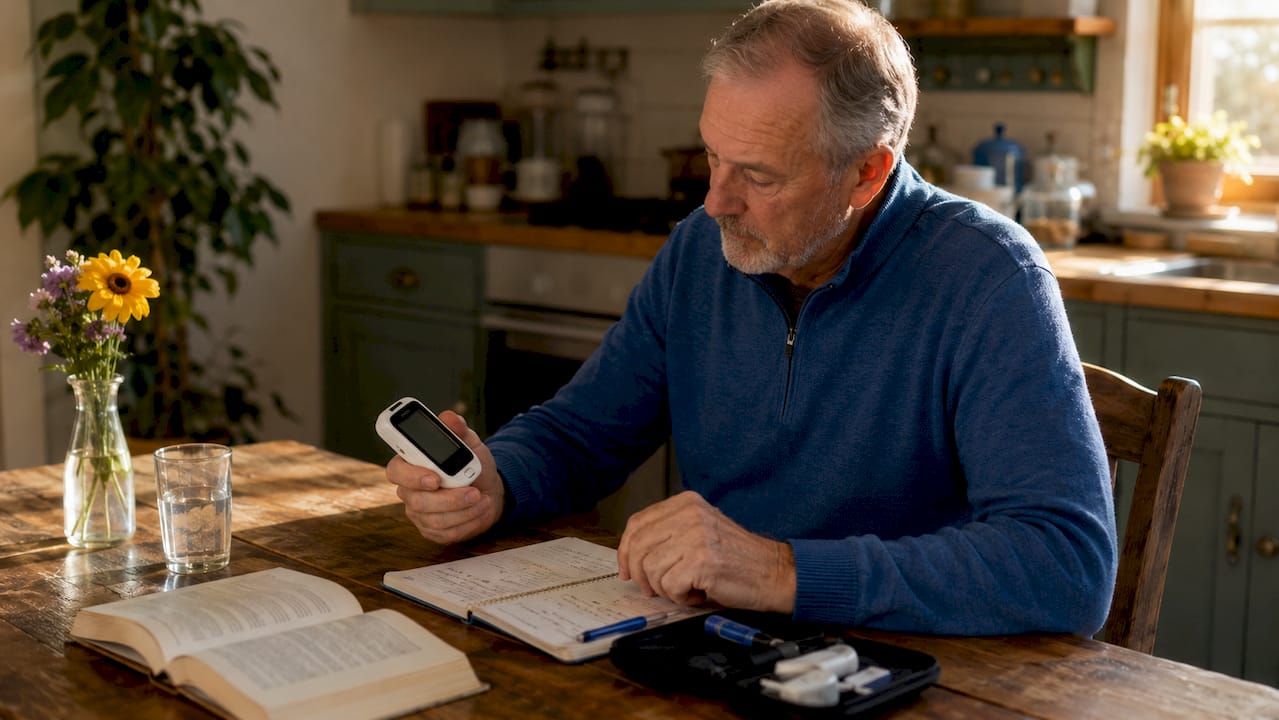
| Tool | Best For | Key Feature | Limitation |
|---|---|---|---|
| RPM Devices (e.g., Tenovi) | Real-time vitals | Automated, time-stamped data | Requires device setup |
| CareClinic App | Symptom + mood logging | Structured daily entries | Manual input needed |
| Paper Symptom Journal | Low-tech users | No battery required | Memory bias risk |
| Wearables (e.g., Fitbit, Apple Watch) | Activity and sleep | Passive data collection | Limited clinical integration |
| Google Sheets / Notion | Custom tracking | Fully flexible | No reminders or alerts |
Remote Patient Monitoring now provides real-time data to detect physiological changes before acute events occur. RPM shortens feedback loops from months to daily monitoring. That shift alone can prevent hospitalizations by catching warning signs early.
Objective vs. subjective metrics
Objective metrics include blood pressure readings, glucose levels, weight, and lab biomarkers. Subjective metrics include your pain score on a 1–10 scale, your energy level, your mood, and your sleep quality. Patients are encouraged to track medication adherence, symptom severity, energy, and hunger levels on structured scales to give care teams a complete dataset. Both types of data belong in your log. One without the other leaves your doctor working with half the story.
- Track at least one objective metric daily (blood pressure, temperature, glucose)
- Rate subjective symptoms on a consistent 1–10 scale every morning
- Log medication timing and dosage, not just whether you took it
- Note any environmental factors that seem to affect your symptoms
Pro Tip: Use CareClinic or a similar app that allows you to set daily reminders. Consistency matters far more than perfection. A 70% completion rate over three months beats a perfect week followed by nothing.
How to build a treatment progress log that you will actually use
A treatment progress log only works if you use it every single day. The setup matters less than the habit. Here is a step-by-step approach that works for people managing complex, exhausting conditions.
- Choose your core metrics. Pick no more than five things to track daily. Start with: symptom severity, energy level, medication adherence, sleep hours, and one condition-specific marker (e.g., skin lesion count for Morgellons, joint pain score for Lyme).
- Pick your format. Digital apps like CareClinic offer structured templates. A notebook works too. What matters is that entries are time-stamped for accuracy, because memory bias makes self-reported logs unreliable when filled in hours or days later.
- Set a fixed logging time. Morning works best for most people. You capture overnight symptoms before the day’s noise drowns them out. Evening works if you need to reflect on the full day.
- Add a weekly summary. Every Sunday, write three sentences: what improved, what worsened, and what stayed the same. This becomes gold when you sit down with your doctor.
- Include non-scale victories. Non-scale victories like improved sleep, mood, and pain levels often precede measurable physiological changes. They sustain motivation during plateaus when the numbers refuse to move.
For visual tracking, such as skin condition changes, monthly photo documentation requires fixed lighting, angle, distance, and timing for valid comparisons. Take photos at the same time of day, in the same room, with the same lighting every single month.
Pro Tip: If tracking fatigue hits, shrink your log to just two metrics for a week. Do not quit entirely. Two data points per day still builds a usable trend line over 30 days.
You can find detailed guidance on organizing your treatment records at home, including how to structure files for easy sharing with your care team.
How do you interpret your data and talk to your doctor?
Data without interpretation is just noise. The goal is to find trends, not to obsess over single readings. One bad day does not mean your treatment is failing. Three bad weeks in a row does.
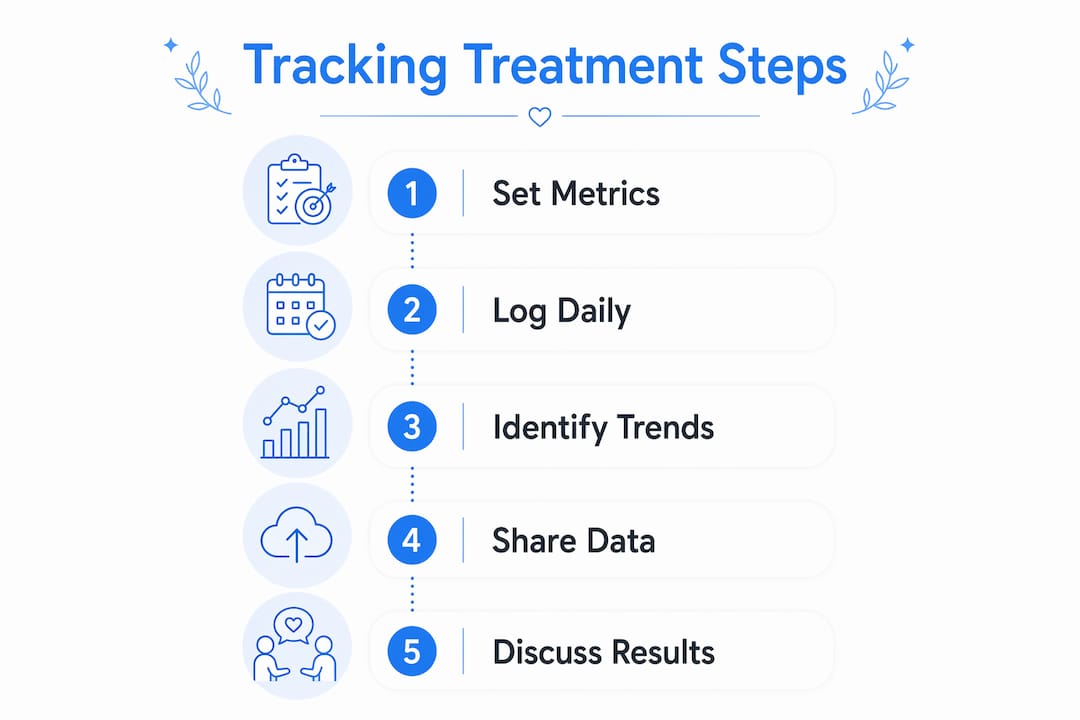
Self-monitoring complements but does not replace clinical oversight. It creates a complete picture and enables longitudinal care. Your job is to bring the data. Your doctor’s job is to interpret it within the clinical context of your full health history.
Here is how to communicate your monitoring data effectively:
- Bring a one-page summary to every appointment. List your top three trends, not every data point. Doctors have limited time. A clean summary gets acted on. A 30-page printout gets set aside.
- Use your weekly summaries to identify patterns. If your energy crashes every Thursday, note that. If your pain spikes after certain foods or activities, flag it.
- Ask specific questions. “My pain scores averaged 7 out of 10 for the past three weeks. Should we adjust my protocol?” is far more useful than “I’ve been feeling awful.”
- Know your escalation thresholds. Ask your care team what numbers or symptoms should trigger an urgent call. Write those thresholds in your log.
- Share digital data when possible. Self-management education transforms patients into active participants in their care by sharing clean, structured data with health providers. Apps like CareClinic can export reports directly.
The goal of every appointment is a decision. More data, better decisions.
What are the biggest challenges in chronic illness monitoring?
The hardest part of disease management strategies is not starting. It is continuing when you feel terrible, when nothing seems to be changing, and when the whole process feels pointless.
“The days I least wanted to log were the days my data mattered most. Those were the entries that showed my doctor exactly where things were falling apart.”
Memory bias is the first enemy. When you fill in yesterday’s symptoms from memory, you unconsciously smooth out the extremes. You forget the 3 a.m. pain spike. You underreport the afternoon crash. Automated, time-stamped entries from apps or devices provide far more accurate health data than manual journaling done after the fact.
The second enemy is data overwhelm. Tracking 15 metrics a day sounds thorough. It burns people out within two weeks. Keep your daily log to five metrics or fewer. Add more only when your care team specifically requests it.
The third challenge is isolation. Monitoring feels lonely when you are doing it alone. Support communities for chronic illness provide accountability partners who understand what you are tracking and why. That shared context keeps people going when motivation runs dry.
Pro Tip: Pair your daily log with one small reward. A cup of tea, five minutes of music, anything that makes the habit feel like self-care rather than homework. Behavioral anchoring works.
Key takeaways
Consistent, structured monitoring is the single most effective way to evaluate chronic illness treatment and give your care team the data they need to help you.
| Point | Details |
|---|---|
| Start with five metrics | Track symptom severity, energy, medication adherence, sleep, and one condition-specific marker daily. |
| Use time-stamped entries | Digital apps reduce memory bias and produce more reliable data for clinical decisions. |
| Track non-scale victories | Mood, sleep, and pain improvements often appear before lab results change and sustain motivation. |
| Bring summaries to appointments | A one-page trend summary drives better clinical decisions than raw data dumps. |
| Self-monitoring supports care teams | Your data enriches clinical oversight; it does not replace it. |
What i have learned after years of tracking my own progress
I spent a long time thinking that if I just felt better, I would know the treatment was working. That is not how it goes with conditions like Morgellons or Lyme. The body lies to you. Some days you feel almost human, and the next morning you are back in the nightmare. Without a log, you cannot tell whether that was a random bad day or the start of a real slide.
What changed everything for me was tracking the small stuff. Not just the dramatic symptoms, but the quiet wins. The first week I slept more than five hours three nights in a row. The day my energy score hit a 6 for the first time in months. Those entries kept me going when the bigger markers refused to budge.
The other thing I will tell you plainly: do not track for your doctor alone. Track for yourself. When you can look back at six weeks of data and see that you are genuinely better in three out of five categories, that is real. Nobody can take that away from you. And when things are worse, the data tells you that too, before it becomes a crisis.
Technology helps, but it is not magic. The best tool is the one you will actually use tomorrow morning. Start there.
— Megan
Support your monitoring efforts with the right products
Tracking your progress is only part of the picture. What you put into your body every day shapes what those numbers look like over time.
Megansmiraclestudio carries a full range of supplements and internal detox products formulated specifically for people managing complex chronic conditions like Morgellons and Lyme disease. These are not generic wellness products. They are built around the real needs of people in active treatment. Megansmiraclestudio also offers online education courses that walk you through treatment protocols, ingredient science, and self-care strategies so you can make informed decisions about your own healing. When your tracking data shows a pattern, you want the knowledge to act on it.
FAQ
What is remote patient monitoring for chronic illness?
Remote Patient Monitoring (RPM) uses connected devices to collect real-time health data and send it directly to your care team. It shortens feedback loops from months to daily, allowing faster clinical intervention when something changes.
How many metrics should i track daily?
Start with five or fewer: symptom severity, energy, medication adherence, sleep, and one condition-specific marker. Tracking too many metrics leads to burnout and inconsistent logging.
What are non-scale victories in chronic illness tracking?
Non-scale victories are improvements in mood, sleep quality, and pain levels that appear before measurable physiological changes show up in lab results. They are reliable early indicators of progress and critical for sustaining motivation.
How do i share my tracking data with my doctor?
Bring a one-page summary of your top three trends to every appointment. Apps like CareClinic can export structured reports. Ask your care team what specific thresholds should trigger an urgent contact.
Does self-monitoring replace clinical care?
Self-monitoring complements clinical care but does not replace it. Your data enriches your care team’s understanding and enables better day-to-day support, but clinical oversight remains the foundation of safe chronic illness management.